Saturday, October 23, 2010

PM Netanyahu’s Remarks at the Conference on the Future of the Jewish People at the Israel Museum


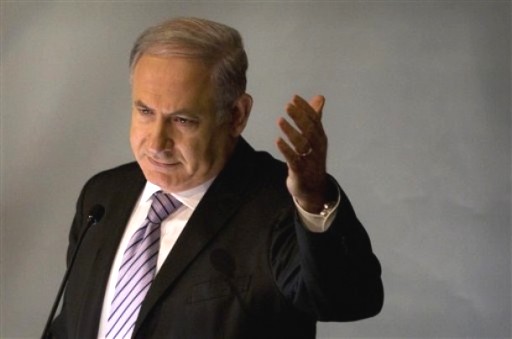
Israeli Prime Minister Benjamin Netanyahu delivers a speech during a conference on the Future of the Jewish People in Jerusalem on October 22, 2010. (Getty Images / AFP PHOTO/GALI TIBBON )


October 22, 2010 (KATAKAMI / PRIME MINISTER’S OFFICE) — Natan Sharansky is a hero of the Jewish people.  He is also a great chess player, and of course I raise that because, aided by the late Tommy Lapid, I played with him the only game of chess – after the age of 15 – before the elections of 1999, I tied. 

I quit – in full glory. 

I have not played another game, until recently with him against Boris Galfand. 

We almost won – no, wait, we tied.  A great hero of the Jewish people in many ways and important ways.
It’s very good to be with all of you – Stu, a very thoughtful, committed thinker about our problem, the Jewish problem. 

And there are so many others here, close friends who, under the important work of Avinoam, bring together people who are thinking about the future of the Jewish state and the Jewish people, and they are inextricably bound. 

I don’t think there’s a future for the Jewish people without a future for the Jewish state.  But I think the future of the Jewish state is important, is inextricably bound also with the commitment of the Jewish people to the nation-state of the Jews.

I want to thank you all for dedicating your valuable time, for considering the ways to enable the Jewish people to address the great challenges that we face in the first part of the 21st century.
At the end of the 19th century, there was a visionary who decided to dedicate his life to that very same purpose.  Theodore Herzl saw the downtrodden condition of the Jewish people; he saw the storms that were gathering against them; and he laid out a clear path that he believed would enable them to weather the storms and direct their destiny to safer shores.

Herzl was right about many things.  He was right about the need for a Jewish state and the need for a Jewish army to defend the state – like all states – against impending attacks.  He was right about the dangers that loomed on the horizon.  He was right that the restoration of the Jews, of Jewish sovereignty, in the Holy Land was not merely an age-old fantasy, but a practical goal that could be achieved in the present.  But Herzl, I think, was too optimistic about the impact that the Jewish state would have on anti-Semitism.

He believed that the rebirth of the Jewish state would gradually put an end to anti-Semitism, and many of the early Zionists enthusiastically agreed with him.  They thought that the establishment of a Jewish state would be an antidote to the age-old hatred of the Jews.  And the irony is that over a century later, many now believe that the Jewish state is the cause of that hatred, and of course both these views are wrong.  The Jewish state is neither the cause nor the cure for anti-Semitism.

The establishment of Israel and the remarkable return of the Jewish people to their homeland did not end hatred towards the Jews.  It merely redirected it.  The old hatred against the Jews as a people has been transformed into a new hatred against the Jewish state.  In fact, the decades following the Holocaust, during which it was unacceptable to say certain things about Jews, can now be clearly seen as a notable exception, rather than a new norm.  Over the last few decades, we have witnessed a return of that phenomenon that long marked our history: the demonization of Jews, the singling out of Jews, the denial of rights to Jews and Jews only.

What was once true of the Jewish people is now true of the Jewish state.  In too many quarters in the international community, Israel is guilty until proven guilty.  But while the Jewish state did not end the hatred towards the Jews, it provided the Jews the means to defend themselves against that hatred, and after 2,000 years of powerlessness, after being subjected to every evil under the sun, the Jews now have the power to defend themselves, and this remains the single greatest transformation of the Jewish condition in modern times.

That is why the key to securing the Jewish future is to secure a strong Jewish state.  When planning for the coming decades, we have to recognize the great dualism that marks our national life in Israel.  It’s a dualism of remarkable progress and extraordinary threats.  We live under a dual existence.  

Israel’s achievements in the last 62 years are truly breathtaking. 

We are a global leader in high technology. 

Our scientists win Nobel Prizes. 

Our innovations in agriculture and medicine, in water and energy, in countless other fields, are changing the world.  They are in every continent and many of the instruments that we use in modern life, especially in communication, in a lot of the medicines we take that cure illnesses – many of them originate in Zion and in Tel Aviv.  And beyond science and technology, Israel is a fount of artistic creativity, with one of the most vibrant and dynamic societies on the globe.  This is the positive side.

At the same time, and this may heighten the achievements that I’ve just described, we are a tiny country that faces threats not faced by any other nation.  There is a sovereign nation not far from here that is developing nuclear weapons, atomic bombs, openly calling for our destruction, calling for wiping us off the map.  Its terror proxies work every day to advance that goal.  These threats have been heightened considerably by an unlikely coalition that has brought together the forces of militant Islam with morally confused fellow travelers in the free world, and both forces work to deny Israel the most elementary rights to defend itself.

The former works with missiles and suicide bombers; the latter through misnamed bodies like: the “UN Human Rights Commission”, the “UN Human Rights Council”, and their attempts to abuse the International Court of Justice.  In the face of these challenges, we have to strengthen and accelerate Israel’s progress, and we have to reduce the threats it faces.

A key to Israel’s progress is to continue to free Israel’s economy and unleash the remarkable talents of our people.  If Israel is to remain strong, defense costs money – a lot of money.  And it’s going to cost more and more and more money.  There is no way that Israel can meet the collective needs of its defense without unleashing its individual talents.  The only way, if I can speak from a collective point of view, that we can meet our defense needs – and they are growing and they will grow more and more and more – is to have a remarkably entrepreneurial society.  And if we are to remain strong in the global market, we have to be more competitive.

It’s not only defense that we have to fund.  We have to fund education, and we have an aging population.  That’s a blessing.  We have one of the longest living populations in the world, and that needs a lot of money.  It required, for example, pension reform – that we did.  You heard of something that is going on in a certain country in Europe?  Raising the retirement age from 60 to 62?  We raised it to 67 – I think we’re number one in the world.  Why?  Because we recognize there’s no other way – no other way to fund our future.  And as someone who led that reform, I can tell you, it’s not easy.  But we did many, many, many other reforms, all clustered together.  I always thought as Finance Minister that it makes sense to maximize the number of reforms per national strike.

We have to have this growth to fund education, to fund our society, to fund our elders, to fund our defense.  And we have done this.  We have changed this country.  If you came here 15 years ago, it was a different country.  If you’ll be here 15 years from now, it will be a different country.  It used to be the country of that joke, you all know it: how do you make a small fortune in Israel?  You come with a big fortune.  Well, no longer.  And the great challenge we have is to have people come with no fortune, who are here with no fortune, but they better themselves because we give them a good education.  And then they can open up a small business, and that business can grow and become a great business.  That’s the challenge.
By the way, there is no other way to ensure a growing economy in the world.  I’ve heard of the various theories that speak of the decline of entrepreneurship and initiative.  There is no other way to stimulate economies.  We’re doing that, and we’re very consistent, although we are part of a global economy.  So our economic fortunes not only depend on us, they depend on the world.  But what depends on us, we have to do, and we are going to do it.

The other key to maintaining our strength is to maintain and strengthen our identity, both inside and outside of Israel.  Because I think that if we know our past, we strengthen our commitment to our common future.  This is why I initiated the Heritage Plan, to strengthen identity within Israel, but also to bring in Jews from all over the world, especially young Jews, to partake in our common heritage which began here and continues here.  And that is why I’ll continue to support programs like Birthright and MASA that have connected an entire young generation of Jews with the State of Israel.

These are great missions: to continue and strengthen our progress as one of the world’s most advanced societies.  But equally, we have to work together to reduce the threats we face.  Israel must do what it can to roll back the dangers of militant Islam, and at the same time to seize any opportunity to advance a secure peace.  Both of these tasks are extremely difficult.  Iran is vying for the leadership of militant Islam.  It continues on its path towards developing nuclear weapons and its bid for regional hegemony.  

In addition to its threats to annihilate Israel, and its denial of the Holocaust, Iran is confronting the United States in Afghanistan and Iraq; it is taking over Lebanon; it is dominating Gaza; it is establishing beachheads in Arabia and in the Horn of Africa; and it sends its tentacles into South America as well.
This is what Iran is doing without a nuclear weapon.  Imagine what it will do with one.  Imagine what its proxies will do under a nuclear umbrella.  

The international community, led by the United States, must constantly make clear in both word and deed that it will not permit Iran to develop nuclear weapons.

Advancing a secure peace is equally difficult.  After 17 years of failure, people should be careful about assuming they have discovered a magic formula for instant success.  

See, I believe that peace is possible, but it must be based on a readiness for mutual compromise – not just the Israeli side making compromises, but the Palestinian side making some fundamental compromises as well. 


If we are to succeed, we must apply the lessons learned from the decade that saw a wave of terrorism and thousands of rockets – twelve thousand rockets actually – fired on our citizens.

For me, the two most important lessons are these: first, only when our peace partners are willing to recognize the legitimacy of the Jewish state will they truly be prepared to end the conflict and make a lasting peace with Israel; and second, only by having effective security arrangements on the ground, will Israel be able to defend the peace.  And in our part of the world, the only peace that holds is a peace we can defend.  Peace can also be unraveled.  I often point out that we had peace – extraordinary relations – with two countries that we had trade relations with, security contacts, even military cooperation with one, the meeting of leaders, we even had 400,000 tourists go to one each year – that was Iran, and second is regrettably Turkey, and I hope we can improve our relations with Turkey.

The establishment of a formal peace treaty does not guarantee that the peace will last.  You need security arrangements for two purposes: one, to ensure that the peace lasts; and second, to protect yourself if it doesn’t.  In order to protect yourself, you have to ensure that we don’t have a repeat, for the third time, of a situation where we left, we vacated territory and Iran walked in.  It walked into Lebanon, it walked into Gaza.  We cannot allow Iran to walk into the hills dominating Tel Aviv and encircling Jerusalem.  

Because that will not merely mean the end of peace, it could put a strategic threat on the future of the Jewish state.

The conclusion I reach is not that we should not advance towards peace.  It is that that peace arrangement must have, built into it, arrangements on the ground – concrete security arrangements that prevent this mistake from reoccurring a third time.  I believe that this is the central expectation of the people of Israel who have suffered after great hopes – despite international guarantees, despite promises to the contrary – from the lack of such security arrangements and the lack of such stringent demands of our peace partners to begin a change and recognize the State of Israel and end the conflict with it.

As all of you know, Israel has a unique political system where one hears many different voices, official voices, about the prospects of peace, about what such a peace might look like and about many other things.  But while I will continue to listen carefully to all these views, I am leading Israel down the path I believe in.  I know there will be many bumps on the road, many obstacles to overcome, but I am confident that by uniting around our legitimate and necessary demands for mutual recognition and security, I think we can increase greatly the chances that we will achieve an historic compromise with our neighbors.

I would ask all of you today to help me forge that unity, both inside and outside Israel.  The more our people speak with one voice about these principles that I think we can unite on – I think we must unite on – the more that voice will be heard clearly throughout the world.

This was very much the view of Herzl, who wanted to have a united voice – it didn’t always succeed – not only about the dangers facing Zionism, but the dangers facing the world.  That was true of Herzl and even more true of his great partner, Max Nordau.  Nordau was one of the greatest thinkers of the late 19th century, and for a decade he was one of the dominant intellectuals of the West.  The great American writers of the early 20th century who speak of him, speak of what a great influence he had on them.  

But Nordau was not successful in his great book, “Degeneration”.  

He spoke about the impending rise of totalitarianism, of fascism and communism and what this will do to the world – not only to the Jews.  He joined Herzl because he believed the Jews have to save themselves against these forces, but he was unable to alert the world to the danger, and the rest is history – world history and our history.

Today we’re in the beginning of the 21st century, and we have to alert the world to the dangers that we face – not only that we face, but that the world faces.  And the dangers Israel faces is not from the rise of China and India, it’s not the danger that America faces either, or the West as it’s commonly known.  That is not the great danger.  I don’t think it’s a danger at all.  The great danger is the fact that wedged right between East and West is the rise of radical Islam that knows no bound: to its ruthlessness and to its acquisition of the weapons of mass death, without any inhibition to their use.  This is new.  This is new in history, because in previous generations it was impossible to acquire a capacity for great destruction and sustain it for any length of time without having an advanced civilization.

Now, primitive societies, barbaric societies, societies that, in the beginning of the 21st century, enslave women, mutilate them, deny human rights to their own citizens, promote terror worldwide and promote the most absurd doctrines – these societies can acquire nuclear weapons, missiles, rockets.  This is new and this is a great, great danger to East and West alike.

I think it is important that we speak together with one voice while we advance our society and make it a model country.  While we seek to pursue peace – a realistic peace, a secure peace – with our neighbors, we must also warn the world, East and West, about the danger to our common future of modernity and to our common civilization.  This is how I think the Jewish people and the Jewish state can truly be a light unto the nations.

Thank you very much.

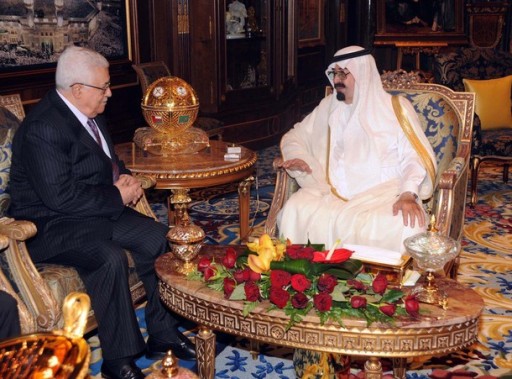
Abbas and Saudi king discuss stalled peace talks


Saudi Arabia's King Abdullah bin Abdulaziz Al Saud (R) speaks to Palestinian President Mahmoud Abbas in Riyadh October 22, 2010. (Getty Images / REUTERS/Saudi Press Agency/Handout )


October 22, 2010 (KATAKAMI / FRANCE24 / AFP) – Palestinian president Mahmud Abbas held talks on Friday with King Abdullah that focused on the stalled peace process with Israel, the official Saudi news agency SPA reported.

They discussed “developments in the Palestinian issue and efforts exerted to put the peace process back on the right path,” it said.

The two leaders also discussed the “need for the international community to assume responsibility to achieve a just and comprehensive peace that would guarantee the Palestinian people’s right to establish its independent state on its national soil, with Jerusalem as a capital,” it added.

Abbas left Riyadh on Friday afternoon, the agency added.

A Palestinian diplomat in Riyadh told AFP Thursday that Abbas’s visit “comes at a critical stage in the negotiations between the Palestinians and the Israelis.”

The diplomat pointed to Israel’s refusal to extend a moratorium on Jewish settlement expansion in the occupied West Bank and east Jerusalem that expired on September 26.

On October 9, foreign ministers of the Arab League, in which Saudi Arabia plays a leading role, said they would wait one more month to see if the direct peace talks can be restarted.

Since the settlement moratorium ended, Jewish settlers have begun building at least 600 homes, a pace four times faster than before the freeze began last year, the Israeli activist group Peace Now said on Thursday.

Friday, October 22, 2010

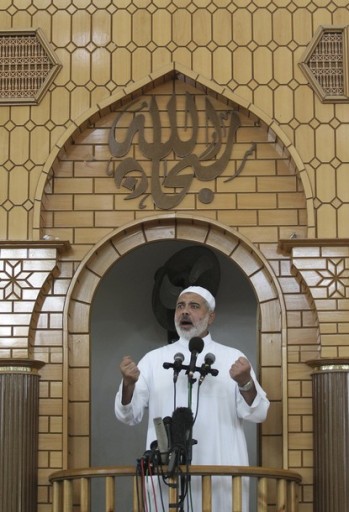
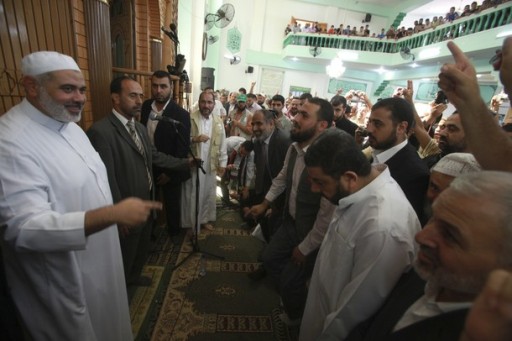
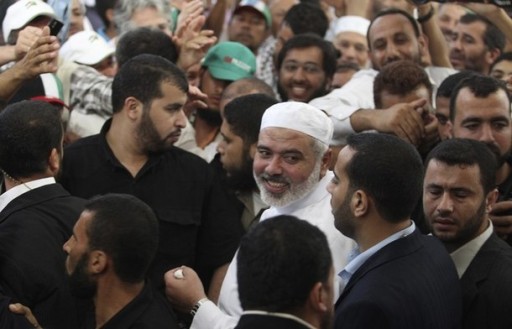
Photostream : Senior Hamas leader Ismail Haniyeh welcomes international peace activists inside al-Garbi mosque at Shati refugee camp in Gaza City

Senior Hamas leader Ismail Haniyeh gives a speech to Palestinians and international peace activists inside al-Garbi mosque at Shati refugee camp in Gaza City October 22, 2010. Hundreds of international peace activists arrived in Gaza on Thursday in a convoy carrying humanitarian supplies, to show solidarity with Palestinians in the blockaded Gaza Strip, an official in the convoy said. (Getty Images / REUTERS/Suhaib Salem )
Senior Hamas leader Ismail Haniyeh (L) welcomes international peace activists and his supporters inside al-Garbi mosque at Shati refugee camp in Gaza City October 22, 2010. Hundreds of international peace activists arrived in Gaza on Thursday in a convoy carrying humanitarian supplies, to show solidarity with Palestinians in the blockaded Gaza Strip, an official in the convoy said. (Getty Images / REUTERS/Suhaib Salem )
Senior Hamas leader Ismail Haniyeh (C) is surrounded by his bodyguard as he welcomes international peace activists at Shati refugee camp in Gaza City October 22, 2010. Hundreds of international peace activists arrived in Gaza on Thursday in a convoy carrying humanitarian supplies, to show solidarity with Palestinians in the blockaded Gaza Strip, an official in the convoy said. (Getty Images / REUTERS/Suhaib Salem )
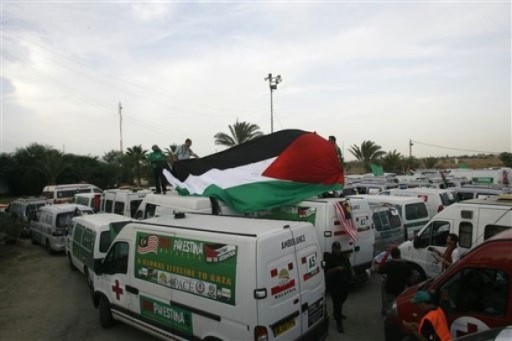
International peace activist hold Palestinian flag as their aid convoy wait to cross in to Gaza at the Rafah border Crossing between Egypt and the Gaza Strip, Thursday, Oct. 21, 2010. The aid convoy arrived in the Gaza Strip overland from Egypt on Thursday to a warm welcome from the territory's Islamic militant, The convoy was organized by 'Viva Palestina,' headed by former British member of parliament George Galloway. Egypt banned Galloway from accompanying the convoy because of previous clashes with Egyptian security. Hamas official Ahmed Youssef said the aid is worth about $5 million and includes 137 used vehicles for ambulances and transport. (Getty Images / AP Photo/Eyad Baba)

Italian Prime Minister Berlusconi : "I hope Israel won't attack"


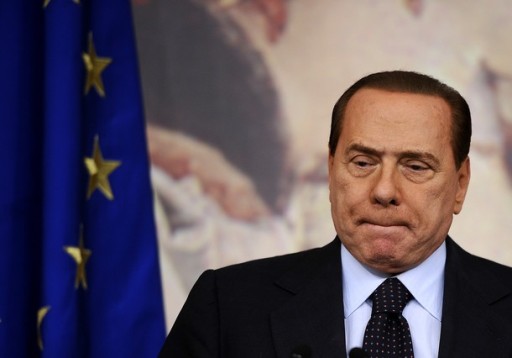
Italian Prime Minister Silvio Berlusconi looks on during a press conference in Rome's Palazzo Chigi on October 22, 2010. (Photo : FILIPPO MONTEFORTE/AFP/Getty Images)


October 22, 2010 (KATAKAMI / YNET) --- Italian premier quoted as telling German daily that gentle approach may be more helpful in dealing with Islamic Republic's nuclear aspirations. 'We can only hope that the nuclear threat is not viewed as so great that Israel takes military action against Iran,' he says.

Italian Premier Silvio Berlusconi has expressed doubts about the effectiveness of sanctions against Iran and argued that a gentle approach might be more helpful.

Iran has been hit with several rounds of international sanctions over its nuclear program, which the United States and allies believe could be used to produce nuclear weapons. Iran insists the program is meant purely for peaceful purposes.

On Friday, Berlusconi was quoted as telling Germany's Frankfurter Allgemeine Zeitung daily that, although Italy has participated in the sanctions, "I fear that sanctions will not bring success."

He said sanctions have tended to reinforce regimes in countries such as Cuba, and "a gentle and circumspect approach would be more helpful," the newspaper reported.

Berlusconi identified Russia and China as countries that could pursue such an approach, and said he had asked China's Premier Wen Jiabao "to use his influence in this direction." The two permanent UN Security Council members have been more hesitant than Western nations about taking a hard line against Iran, and Russian engineers have helped Iran build a nuclear power plant.

Italy has supported UN sanctions despite its strong commercial ties with Tehran, but also has always tried to reach out to Iran by trying to get it involved in issues such as Afghanistan's future.

Asked if Iran can be integrated in the international community, Berlusconi replied: "We must at least try that - it is the only way to get Iran out of its blind alley."


Israel is particularly worried about Iran's intentions. As Iran's archenemy, the Jewish state fears it will be targeted by Iran and Iranian President Mahmoud Ahmadinejad has repeatedly made references to Israel's destruction. 

"Regarding Israel, we can only hope that the nuclear threat is not viewed as so great that Israel takes military action against Iran," Berlusconi was quoted as saying.

PM Netanyahu : We'll work to ward off radical Islam


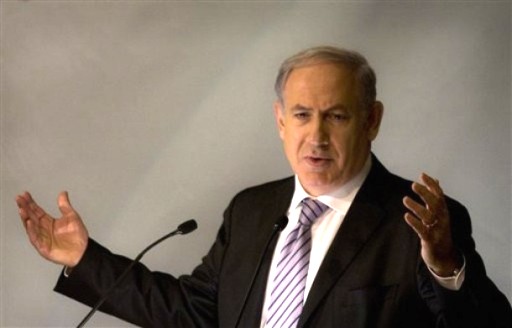
Israeli Prime Minister Benjamin Netanyahu gestures as he speaks at the Jewish People Policy Institute's annual conference in Jerusalem, Friday, Oct. 22, 2010. (GETTY IMAGES / AP Photo/Sebastian Scheiner) 


October 22, 2010 (KATAKAMI / YNET) — Addressing world Jewish leaders in Jerusalem, Netanyahu talks about challenges faced by State – including Iran, peace talks and hatred of Israel. ‘The future of the Jewish people depends on Jews’ level of commitment to Israel worldwide,’ he says.

Prime Minister Benjamin Netanyahu on Friday addressed world Jewish leaders at the Israel Museum in Jerusalem as part of the Jewish People Policy Institute’s conference on the future of the Jewish people.
“We are facing pressures and challenges that no other country is facing,” he said. “There is a country in the east making every effort to develop a nuclear weapon in order to destroy us. Defense costs money, a lot of money. There is no way for us to obtain this money without a strong economy based on society’s achievements.”

According to Netanyahu, “Israel must do all in its power to ward off the goals of radical Islam while doing all it can to reach true peace. Iran continues to deny the Holocaust and call for Israel’s destruction. Today, its influence is apparent in Gaza, Lebanon, Afghanistan, South America and Africa. This is what they are doing without a nuclear weapon – imagine what they would do with a nuclear weapon,” he added.
“The international community must ensure that this weapon will not be attained by the Iranians.”

The prime minister expressed his hope for the improvement and strengthening of Israel’s relations with Turkey would. “The danger from the east is not just our danger, but the entire world’s danger. A country which denies the human rights of its own citizens, which aspires to obtain mass destruction weapons, is a great danger to the entire world.”

’12,000 rockets fired on us’


Addressing peace talks with the Palestinians, Netanyahu said he believed “peace is attainable, but it requires concessions, and not just on the Israeli side but also the Palestinian side. We left Gaza and had 12,000 rockets fired on us. So my conclusions are that, one, only when our partners recognize the State of Israel as a Jewish state they will be ready for peace; and two, the only peace which will survive is peace that can be protected. We must have guarantees in the peace agreement for it to be sustainable.”
He took the opportunity to thank the Jewish leaders for their support of Israel.

“I don’t think the Jewish people have a future without the State of Israel, but this future depends on Jews’ level of commitment to Israel across the world. We were too optimistic thinking that the establishment of the Jewish state would help reduce anti-Semitism. The truth is that the Jews’ return to the Land of Israel and the State’s establishment did not make any difference in terms of anti-Semitism, but turned the hatred for Jews into a hatred for the State of Israel,” Netanyahu ruled.

According to the prime minister, the phenomenon of demonization of Jews has been repeated in recent generations in the form of libels being told against Israel.

“The difference is in our ability, as a state, to defend ourselves,” he clarified. “Defending Jews is possible through a strong Jewish state. The accomplishments we have made over the past 60 years are amazing. We have impressive technological achievements, our scientists have won the Nobel Prize, and these are only some of the achievements.”

PM Netanyahu : Recognition of Jewish state only sign of peace readiness

Israeli Prime Minister Benjamin Netanyahu gestures as he speaks in the Jewish People Policy Institute's annual conference in Jerusalem, Friday, Oct. 22, 2010. (Getty Images / AP Photo/Sebastian Scheiner)

October 22, 2010 (KATAKAMI / YNET) — Speaking at a conference on the future of the Jewish people, Prime Minister Benjamin Netanyahu said Friday that “only when our partners recognize the State of Israel as a Jewish state they will be ready for peace.”

The prime minister said this was his conclusion “after we left Gaza and had 12,000 rockets fired on us.” He noted that “the only peace which will survive is one that can be defended.”

Photos : Palestinian couples take part in a mass wedding ceremony in the West Bank city of Nablus

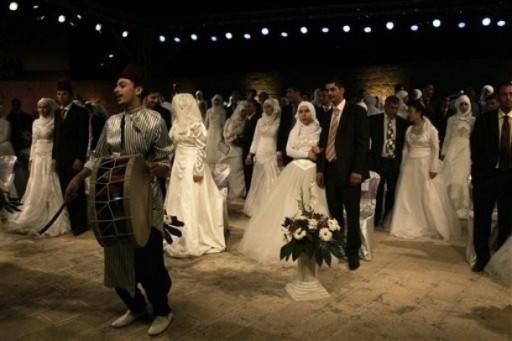
A veiled Palestinian bride poses for pictures during a mass wedding ceremony in the West Bank city of Nablus, Thursday, Oct. 21, 2010. 50 Palestinian couples participated in the ceremony during a large rally sponsored Palestinian President Mahmoud Abbas and Fatah. (Getty Images /AP Photo/Nasser Ishtayeh)
Palestinian couples take part in a mass wedding ceremony in the West Bank city of Nablus, Thursday, Oct. 21, 2010. 50 Palestinian couples participated in the ceremony during a large rally sponsored Palestinian President Mahmoud Abbas and Fatah. (AP Photo/Nasser Ishtayeh/Getty Images)
Russian-Turkmenistani talks

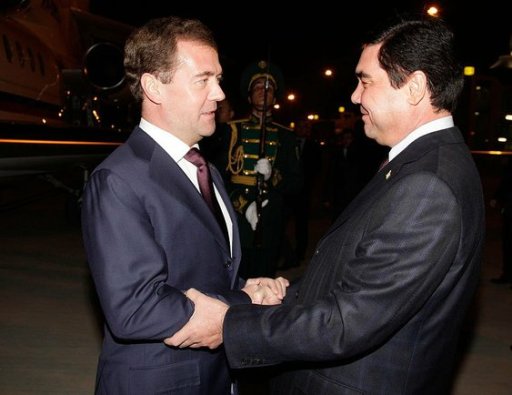
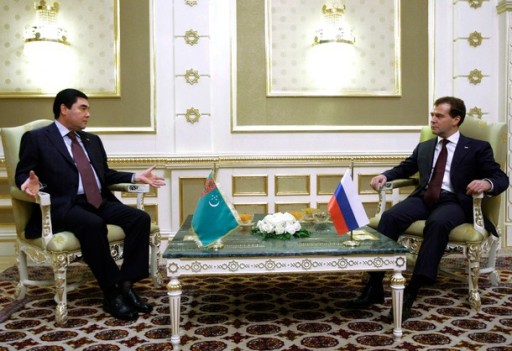
Turkmen President Gurbanguly Berdymukhamedov (R) meets with his Russian counterpart Dmitry Medvedev

October 22, 2010 (KATAKAMI / KREMLIN.RU) — Dmitry Medvedev and President of Turkmenistan Gurbanguly Berdimuhamedov discussed a broad range of bilateral cooperation issues, in particular trade and economic ties and joint projects in energy, agriculture, transport, telecommunications, and humanitarian sector, as well as a number of regional issues.

President Medvedev noted that energy remains one of the two countries’ key cooperation areas and said that Russia is ready to expand ties in the electricity and gas sectors. The President also underlined the need to develop cooperation in energy efficiency and new technology.

Dmitry Medvedev stressed he hoped to see the Caspian region countries continue friendly cooperation. The Caspian Sea is the common wealth shared by the five countries that are responsible for present and future laws regulating the region’s natural resources, the President said.

Photostream: Russian President Dmitry Medvedev visits Turkmenbashi


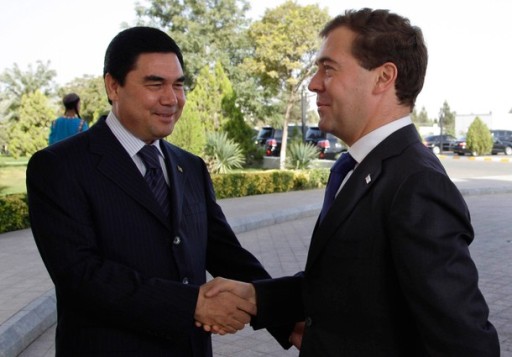
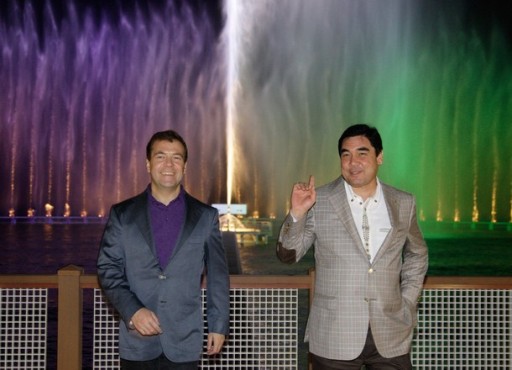
Russian President Dmitry Medvedev (R) shakes hands with his Turkmen counterpart Gurbanguly Berdymukhamedov on October 22, 2010 in the city of Turkmenbashi on the Caspian Sea coast. Medvedev is to discuss energy cooperation during his visit to the Central Asian state. ( AFP PHOTO / RIA-NOVOSTI / KREMLIN POOL / DMITRY ASTAKHOV )

Turkmen President Gurbanguly Berdymukhamedov (L) meets with his Russian counterpart Dmitry Medvedev late on October 21, 2010 upon his arrival in Turkmenbashi. Medvedev is expected to discuss energy cooperation during his visit to the Central Asian state. (Photo : DMITRY ASTAKHOV/AFP/Getty Images)

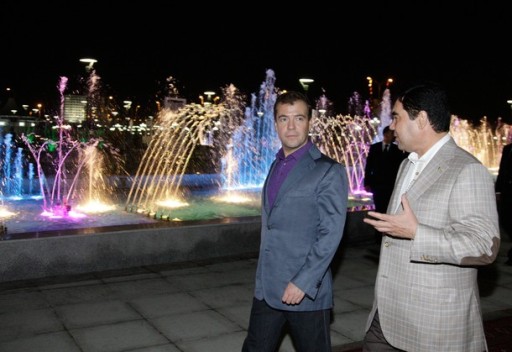
Russian President Dmitry Medvedev (L) and his Turkmen counterpart Gurbanguly Berdymukhamedov take a walk late on October 21, 2010 in the city of Turkmenbashi on the Caspian Sea coast. Medvedev is to discuss energy cooperation during his visit to the Central Asian state. (Photo : DMITRY ASTAKHOV/AFP/Getty Images)

Turkmenistan's President Gurbanguly Berdimuhamedov (R) and his Russian counterpart Dmitry Medvedev walk during their meeting in the city of Turkmenbashi, October 21, 2010. Turkmenistan is eager to boost gas exports via Russia, the country's Berdymukhamedov said Friday during a meeting with Medvedev. Picture taken October 21, 2010. (Photo : REUTERS/Ria Novosti/Kremlin/Dmitry Astakhov / Getty Images)

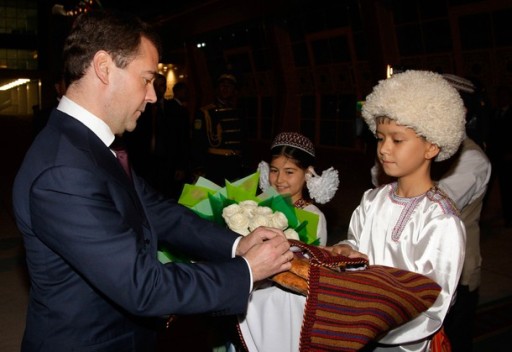
Turkmen children in traditional costumes welcome Russian President Dmitry Medvedev late on October 21, 2010 upon his arrival in Turkmenbashi. Medvedev is expected to discuss energy cooperation during his visit to the Central Asian state. (Photo : DMITRY ASTAKHOV/AFP/Getty Images)

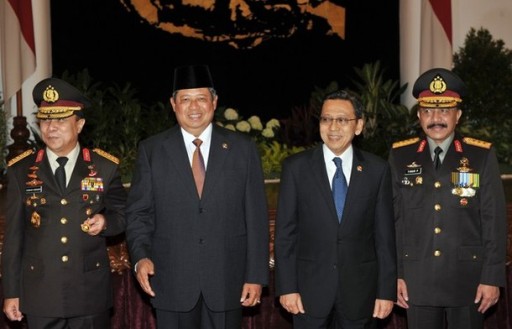
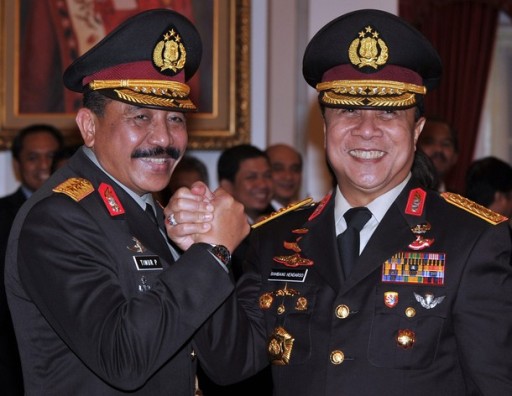
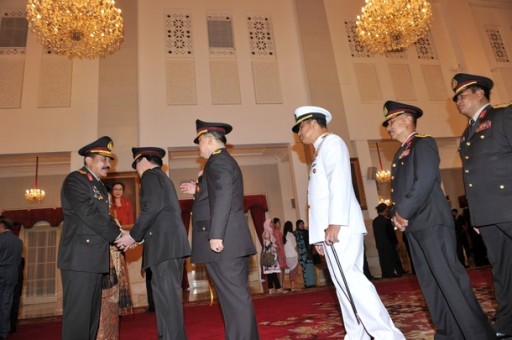
Photostream : Swearing-in Ceremony of the new Indonesian Police Chief, Timur Pradopo


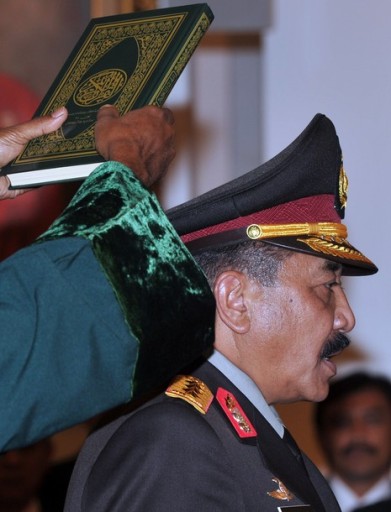
An official holds the holy Koran over Indonesia's incoming National Police Chief three-star General Timur Pradopo (R) during the swearing-in ceremony by President Susilo Bambang Yudhoyono at the presidential palace in Jakarta on October 22, 2010.  (GETTY IMAGES / AFP PHOTO / ADEK BERRY )

Indonesian President Susilo Bambang Yudhoyono (2L) poses with Vice President Boediono (2R), incoming Police Chief three-star General Timur Pradopo (R) and outgoing Police Chief Bambang Hendarso Danuri (1L) during the swearing-in at the presidential palace in Jakarta on October 22, 2010.  (Photo : ADEK BERRY/AFP/Getty Images)

Indonesia's incoming National Police Chief three-star General Timur Pradopo (L) poses next to outcoming police chief Bambang Hendarso Danuri (R) after the swearing-in ceremony by President Susilo Bambang Yudhoyono at the presidential palace in Jakarta on October 22, 2010.  (Photo : ADEK BERRY/AFP/Getty Images)

Incoming Police Chief three-star General Timur Pradopo (L) is congratulated by colleagues during the swearing-in at the presidential palace in Jakarta on October 22, 2010. (Photo : ADEK BERRY/AFP/Getty Images)

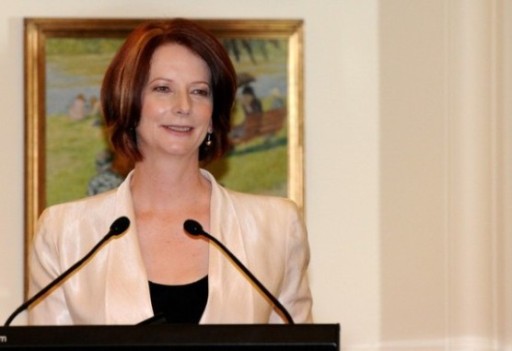
PM Julia Gillard to visit Malaysia, Indonesia


October 22, 2010 (KATAKAMI / ABC.NET.AU) --- Prime Minister Julia Gillard has announced she will make official visits to Malaysia and Indonesia later this month, after her already-planned attendance at the East Asia Summit in Vietnam.

Ms Gillard has announced she will hold talks with Malaysian prime minister Najib Razak in Kuala Lumpur during an official visit to the country on October 31 and November 1.
She will then travel to Indonesia at the invitation of president Susilo Bambang Yudhoyono for formal meetings on November 1 and 2.

Both countries are critical to some of the key issues facing Ms Gillard, including counter-terrorism and people smuggling, as well as environmental and trade issues.

The trip to Indonesia follows Mr Yudhoyono's trip to Australia in March this year and a joint commitment that Australian and Indonesian leaders would meet annually.

Ms Gillard will also attend the East Asia summit in Hanoi, including the inaugural ASEAN-Australia leaders summit.

British Chancellor George Osborne visits Korea


October 22, 2010 (KATAKAMI / FCO.GOV.UK) --- Chancellor of the Exchequer George Osborne will visit Korea to attend the G20 Finance Ministers and Central Bank Governors meeting in Gyeongju.

The Chancellor will visit Korea from Friday 22nd - Saturday 23rd October to attend the G20 Finance Ministers and Central Bank Governors meeting in Gyeongju.

He also attended the June G20 meeting in Busan.

During the two day visit, the Chancellor will represent the UK at the G20 meeting, which will run from Friday until Saturday evening. Charles Bean, Deputy Governor of Bank of England, will accompany the Chancellor to attend the Meeting in Gyeongju.

Commenting ahead of the Chancellor's visit, Martin Uden, British Ambassador to Seoul, said:

"We see the key goal for the G20 as being to continue the recovery of the world economy and secure sustainable growth.  We need to maximise growth through the right combination of three things: deficit reduction; tackling imbalances, particularly through actions by emerging economies; and structural reform in advanced economies.

I know that the British Chancellor of the Exchequer, Mr Osborne, is also looking forward to his visit to Korea for the Summit in November.''

Further information

The Chancellor of the Exchequer is responsible for overseeing the work of Her Majesty's Treasury, the government department responsible for economic and budgetary issues. A biography of the Chancellor is on the HM Treasury website.

Follow British Ambassador to the Republic of Korea on Twitter: @martin_uden

Indonesia most dangerous volcano ready to erupt – local authorities


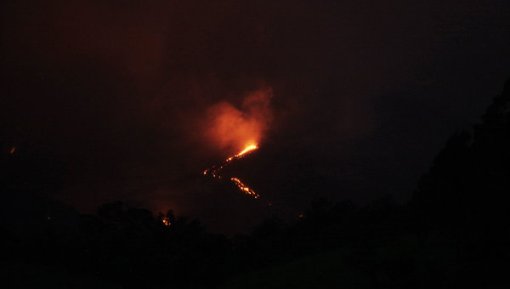
Merapi is one of the most active and dangerous volcanoes in Indonesia and has produced more lava flows than any other volcano in the world.

October 22, 2010 (KATAKAMI / RIA NOVOSTI) --- The Indonesian Center for Volcanology has issued a third-degree warning on the possible eruption of the Merapi volcano in densely populated central Java, local media reported on Friday.

Merapi is one of the most active and dangerous volcanoes in Indonesia and has produced more lava flows than any other volcano in the world. It has been active for 10,000 years and has registered eruptions on average every four years.

"The status of Merapi was raised on September 21 from the second degree "warning" to the third degree "expectation," and all activities in the threatened area around the volcano will be banned for safety reasons," said Surono, the head of the Center for Volcanology.

The official said the volcano's activity had been rapidly increasing, accompanied by tremors and frequent lava spills.

Most eruptions of Merapi involve a collapse of the lava dome creating lava flows which travel 6 to 7 km from the summit.

"According to our calculations, the new eruption could produce lava flows that travel up to 15 miles," Surono said.

Merapi is located about 20 miles north of the city of Yogyakarta, and thousands of people live on the flanks of the volcano, with villages as high as 1,700 m above sea level.

In 1997 and in 2006, thousands of Merapi villagers have been evacuated when it began spewing ash and lava.

The worst eruption in 1930 killed about 1,300 people.


JAKARTA, October 22 (RIA Novosti)

G20 finance ministers meet in South Korea


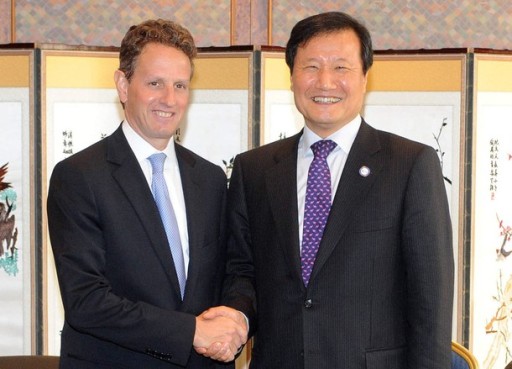
South Korean Finance Minister Yoon Jeung-hyun (R) shakes hands with U.S. Treasury Secretary Timothy Geithner during a meeting ahead of the G20 Finance Ministers and Central Bank Governors meeting in Gyeongju, southeast of Seoul, October 22, 2010. G20 officials are unlikely to reach an accord rejecting currency devaluations and capping current account balances, an informed source said on Thursday, after U.S. proposals ran into stiff opposition. (GETTY IMAGES / REUTERS/Finance Ministry/Handout )


October 22, 2010 (KATAKAMI / BBC) --- Finance ministers from the G20 leading economies are meeting in Gyeongju, South Korea, ahead of a summit by heads of state and government next month.

Continuing tensions over exchange rates are likely to dominate proceedings.

China is resisting pressure to allow the yuan to appreciate significantly, and many developing countries also fear a currency rise could hit exports.

Low interest rates in wealthy countries have encouraged investors to seek better returns in emerging economies.


Common approach

The G20 is trying to find a co-ordinated path out of the financial crisis.

Perhaps their most immediate challenge now is to agree a common approach to the problems in the currency markets.

All the signs are that the finance ministers will struggle to make significant headway.

Many developing countries are concerned about upward pressure on their currencies, which could make their exports less competitive.

Behind that pressure are very low interest rates in rich countries, which have led investors to seek better returns in emerging economies. That tends to push the currencies higher.

China has resisted this upward pressure on the yuan by buying dollars.


South Korean President Lee Myung-bak (r) talks with World Bank President Robert Zoellick in Korea
There is a widespread desire in the G20 to see China cut back on currency intervention

That exacerbates the problem for other countries that compete with China.

There is a widespread desire in the G20 to see China cut back on the intervention and allow the yuan to rise, expressed most forcefully by US officials.

But China shows no inclination to make much of a move in the near future.

The other factor behind the currency tension - the low interest rates in rich countries - is also unlikely to change soon.

It is a result of their faltering economic recoveries.

Indeed, there are signs that central banks in the US and UK might take further steps to simulate recovery, which could lead to still lower interest rates and even more money flooding into emerging economies, further aggravating the currency tension.

Photostream : Israel marks 15th anniversary of Rabin’s assassination

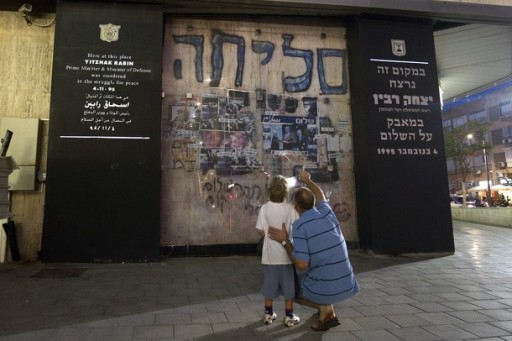
An Israeli man and his son visit the site where late prime minister Yitzhak Rabin was assassinated in Tel Aviv in 1995 at the hands of a Jewish extremist opposed to peace with the Palestinians as Israel marks the 15th anniversary of the killing on October 20, 2010. (Photo : JACK GUEZ/AFP/Getty Images)
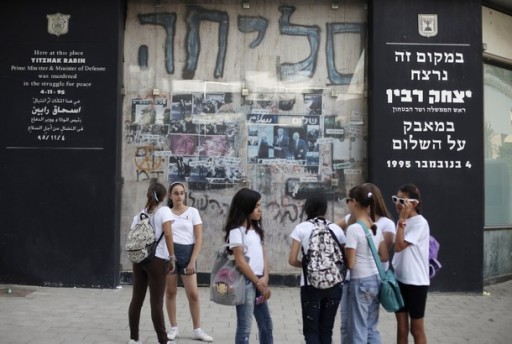
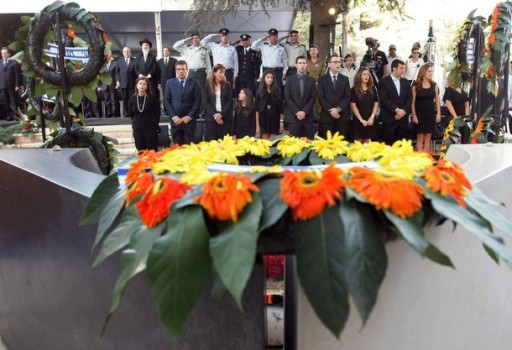
Israeli school children stand next to a memorial marking the site where Prime Minister Yitzhak Rabin was assassinated in Tel Aviv October 20, 2010. On Wednesday Israel marks the 15th anniversary of Rabin's killing by an ultra-nationalist Jewish assassin. (GETTY IMAGES / REUTERS/Nir Elias )
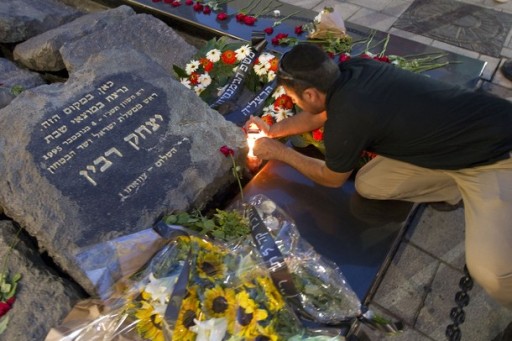
An Israeli man lights a candle at a memorial site for late prime minister Yitzhak Rabin in Tel Aviv on October 20, 2010 to mark the 15th anniversary of his assassination at the hands of a Jewish extremist opposed to peace with the Palestinians. (Photo : JACK GUEZ/AFP/Getty Images)
Family members of the late Israeli Prime Minister Yitzhak Rabin stand in front of his grave during a memorial ceremony on Mount Herzl military cemetery in Jerusalem marking the anniversary of his assassination October 20, 2010. Israel marks on Wednesday the 15th anniversary of Rabin's assassination by an ultra-nationalist Jew. (GETTY IMAGES / REUTERS/Alex Kolomoisky/Pool )
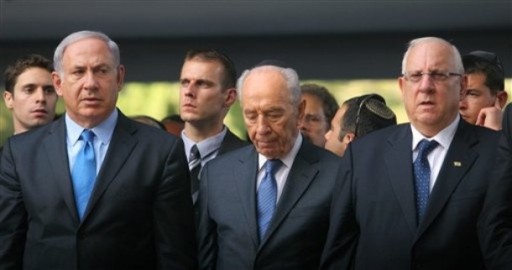
Israeli Prime Minister Benjamin Netanyahu, left, President Shimon Peres, center, and Parliament Speaker Reuven Rivlin attend a memorial ceremony marking the 15th anniversary of late Prime Minister Yitzhak Rabin's assassination, at the Mt. Herzl cemetery in Jerusalem, Wednesday, Oct. 20, 2010. Israel on Wednesday marked 15 years since Prime Minister Yitzhak Rabin was assassinated by an Israeli extremist who opposed his concessions for peace with the Palestinians. (GETTY IMAGES / AP Photo/Alex Kolomoisky, Pool)
Israeli Prime Minister Benjamin Netanyahu speaks at a memorial ceremony marking the 15th anniversary of late Prime Minister Yitzhak Rabin's assassination, at the Mt. Herzl cemetery in Jerusalem, Wednesday, Oct. 20, 2010. Israel on Wednesday marked 15 years since Prime Minister Yitzhak Rabin was assassinated by an Israeli extremist who opposed his concessions for peace with the Palestinians. (GETTY IMAGES / AP Photo/Alex Kolomoisky, Pool)

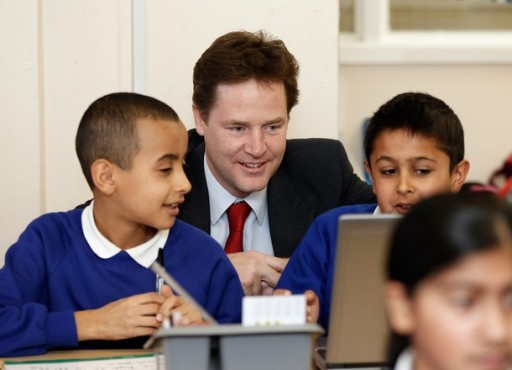
Photostream : Britain’s PM David Cameron and Deputy PM Nick Clegg visits Wellbeck Primary School in Nottingham

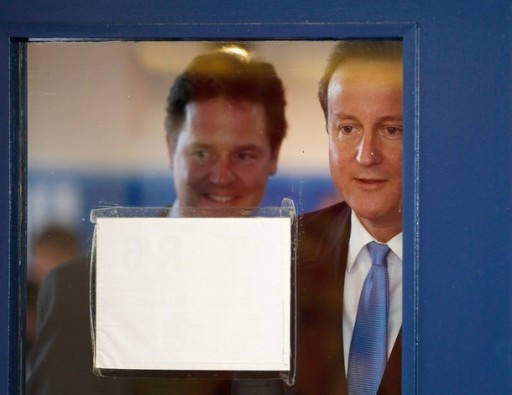
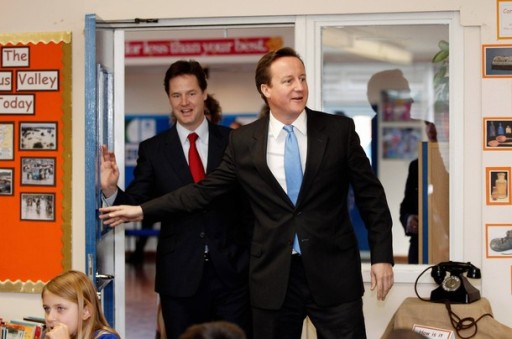
Britain's Prime Minister David Cameron waits outside a classroom with Deputy Prime Minister Nick Clegg during a joint visit to Wellbeck Primary School in Nottingham, in central England, October 21, 2010. (GETTY IMAGES / REUTERS/Christopher Furlong/Pool )
Britain's Prime Minister David Cameron (R) and Deputy Prime Minister Nick Clegg enter a classroom during a joint visit to Wellbeck Primary School in Nottingham, in central England, October 21, 2010. ( GETTY IMAGES / REUTERS/Christopher Furlong/Pool )
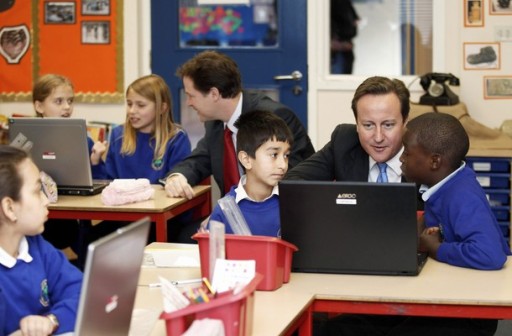
Britain's Deputy Prime Minister Nick Clegg (L) and Prime Minister David Cameron chat with pupils during a joint visit to Wellbeck Primary School in Nottingham, in central England, October 21, 2010. (GETTY IMAGES / REUTERS/Christopher Furlong/Pool )
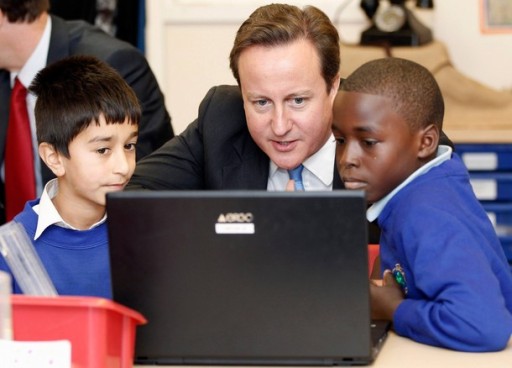
Britain's Prime Minister David Cameron chats to pupils during a joint visit to Wellbeck Primary School in Nottingham with Deputy Prime Minister Nick Clegg, in central England, October 21, 2010. (REUTERS/Christopher Furlong/Pool / GETTY IMAGES)
Deputy Prime Minister Nick Clegg chats to year six pupils during a visit to Welbeck Primary School on October 21, 2010 in Nottingham, England. After yesterdays government spending review Chancellor George Osborne has insisted that cuts are 'fair' amidst claims that the poorest will be hit hardest. (Photo : Christopher Furlong - WPA Pool /Getty Images)

Carter: Hamas eager to renew talks for Shalit’s release

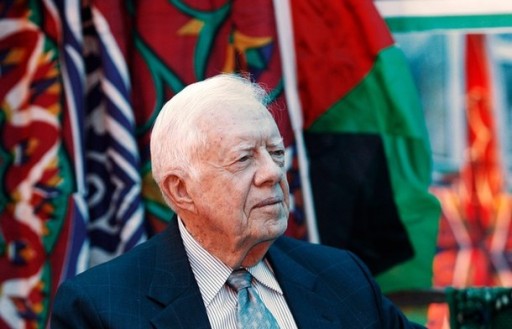
Member of the 'Council of Elders' Delegation former U.S. President Jimmy Carter listens to Palestinian residents (not seen) during a visit to the Elders Delegation in the Arab East Jerusalem neighborhood of Silwan on October 21, 2010 in East Jerusalem. The Elders, an independent council of retired world figures, visited the neighbourhood to speak with Palestinian residents whose homes are facing demolition. (Photo : Ammar Awad - Pool/Getty Images)


October 21,2 010 (KATAKAMI / HAARETZ) — The Elders hold meetings with Hamas officials, discuss stalled negotiations for Shalit’s release and Middle East peace talks. 

Former American President Jimmy Carter said Thursday that Hamas was interested in renewing negotiations for a prisoner swap deal in exchange for captive Israel Defense Forces soldier Gilad Shalit.
“They let us know… they are very eager to proceed,” Carter told reporters in East Jerusalem several days after meeting Hamas officials in Syria.

Top Hamas official Musa Abu Marzuq confirmed Saturday reports recently denied by the Hamas party that the German mediator, Gerhard Conrad, visited the coastal enclave two weeks ago in a bid to resume the frozen negotiations.

“They are very glad that the German negotiator has been back on the scene lately and that Israeli Prime Minister [Benjamin] Netanyahu has made some positive statements about a prisoner exchange,” Carter said, adding that “they maintained that they are very eager to have a swap but they are demanding the release of some prisoners that are not acceptable to the Israeli negotiators.”

The former president, who arrived in Israel with a delegation of former world leaders, The Elders, held meetings with Hamas officials in Syria, during which they discussed the stalled negotiations fro Shalit’s release and Middle East peace talks.

Shalit was kidnapped by Gaza militants in a cross-border raid in 2006 and has been held by Hamas since. Hamas has demanded the release of hundreds of Palestinian prisoners held in Israeli prisons in exchange for Shalit’s freedom.

The negotiations have been stuck in recent months following Conrad’s failure to reach a deal. The previous round of talks broke down due to Israel’s rejection of Hamas’s demands.

The Elders delegation includes, besides Carter, former Irish president Mary Robinson and former UN envoy Lakhdar Brahimi.
During the Elders’ visit to the East Jerusalem neighborhood of Silwan, carter criticized the Israeli occupation of the West Bank and said that East Jerusalem should be the capitol of a Palestinian state.
In the past week the Elders have visited Syria, Ramallah, Gaza, Egypt and Jordan. Carter, however, did not join the Elder’s visit to Gaza on Saturday.

During their visit on Syria on Tuesday, Carter called for Israel to lift completely its blockade on the Gaza Strip. Despite the U.S. and the European Union’s labeling of Hamas as a terrorist organization, The Elders met with exiled Hamas politburo leader Khaled Meshal, as Carter has done during previous regional visits.

Following their talks with Assad and Meshal, The Elders said people in the region have “very low expectations” that the current U.S.-led talks between Israel and the Palestinian Authority, which excluded Hamas, would succeed.

Moscow : Sergei Sobyanin officially sworn into office

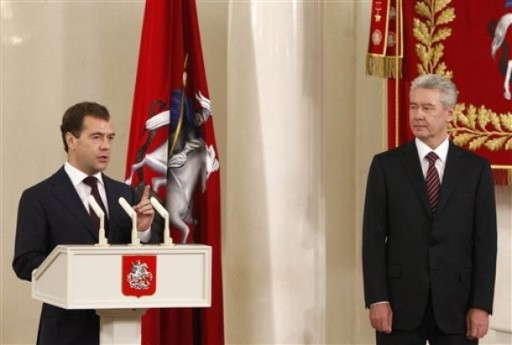
Russian President Dmitry Medvedev, left, delivers a speech while new Moscow Mayor Sergei Sobyanin listens to during an inauguration ceremony in Moscow, Thursday, Oct. 21, 2010. Prime Minister Vladimir Putin's chief of staff was named Thursday the Russian capital's new mayor in a move that would tighten federal control over Moscow's political scene and business interests. The appointment of Sergei Sobyanin underlined Putin's preeminence in Russian politics and would allow him to directly oversee Moscow's money flows that account for a sizable chunk of the nation's wealth. (Getty Images / AP Photo/Grigory Dukor, Pool)


MOSCOW, October 21 (KATAKAMI / Itar-Tass) — The newly-approved mayor of Moscow, Sergei Sobyanin, has been officially sworn into office.

Russian President Dmitry Medvedev is attending the inauguration ceremony held in the White Hall of the Moscow’s city administration building.

Earlier in the day, the lawmakers from the Moscow City Duma (or legislature) voted to vest Sobyanin, a presidential nominee, with the powers of the Moscow mayor.