Wednesday, November 3, 2010

GOP to grab U.S. House majority; Democrats poised to retain Senate


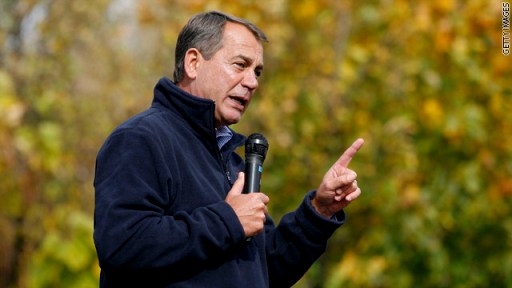
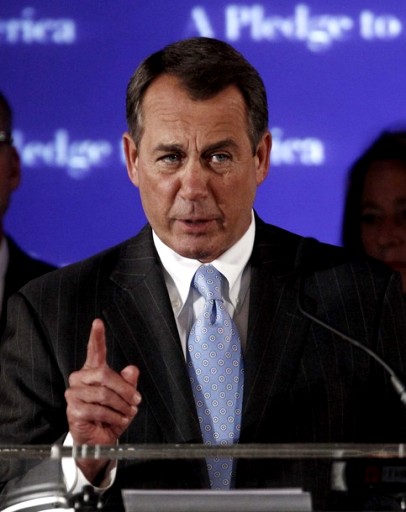
U.S. House Minority Leader John Boehner (R-OH) addresses a Republican election night results watch rally in Washington, November 2, 2010. (Getty Images / REUTERS/Jim Young )

November 02, 2010 Washington (KATAKAMI / CNN) -- Republicans rode a wave of voter dissatisfaction with the state of the economy to win majority control of the U.S. House of Representatives in Tuesday's midterm elections, while Democrats were poised to retain their majority in the Senate.

With results still coming in and voting continuing in Western states, the extent of the Republican takeover of the 435-member House was still to be determined. But CNN projected that Republicans would win at least 52 more House seats than they currently hold to wipe out the Democratic majority of the past four years.

At 11 p.m. ET, CNN made more projections in this game-changing election.

Projections are based on CNN analysis of exit poll data:

-- Republican businessman Ron Johnson has won the Wisconsin Senate race, ending Democratic Sen. Russ Feingold's bid for a fourth term.

-- Democratic incumbent Sen. Ron Wyden has won his bid for re-election to his Oregon Senate seat, beating out Republican nominee Jim Huffman.

-- Republican incumbent Sen. Mike Crapo has won his bid for re-election to his seat as Idaho senator.

-- In a heated gubernatorial race, Republican Nikki Haley has defeated Democrat Vincent Sheheen in South Carolina.

Republican candidates also were running strong in other governors' races, while Democrats held on to some key Senate seats and appeared likely to stay in control of that chamber.

An energized conservative electorate, fueled by the anti-establishment Tea Party movement that emerged in 2009, helped Republicans to what could be their biggest gain in congressional elections in decades.

Tea Party-backed Republicans Rand Paul in Kentucky and Marco Rubio in Florida won their Senate races, while another GOP candidate, John Boozman, will defeat incumbent Democrat Blanche Lincoln in Arkansas, according to the projections based on CNN analysis of exit poll data.

In Indiana, conservative Republican Dan Coats was the projected winner to take over the Senate seat held by retiring Democrat Evan Bayh. The projected victories by Coats and Boozman and John Hoeven in North Dakota gave Republicans three pick-ups in the Senate.

However, Democrat Chris Coons was the projected winner over Republican Christine O'Donnell, another Tea Party-supported candidate, in Delaware's Senate race for the seat formerly held for decades by Vice President Joe Biden. In Connecticut, Democratic Attorney General Richard Blumenthal will defeat Republican Linda McMahon, the former professional wrestling executive, for the Senate seat held by retiring Democrat Chris Dodd.

Another big Democratic victory came in West Virginia, where Gov. Joe Manchin was projected to win the Senate seat formerly held by the late Democratic Sen. Robert Byrd, who died earlier this year.

Other projected winners included incumbent senators such as Republicans Jim DeMint in South Carolina, Richard Shelby in Alabama, Tom Coburn of Oklahoma, John McCain in Arizona, David Vitter in Louisiana, John Thune in South Dakota, Richard Burr in North Carolina and Johnny Isakson of Georgia, along with Democrats Patrick Leahy of Vermont, Barbara Mikulski of Maryland, and Kirsten Gillibrand and Charles Schumer of New York.

The projected victories by Coons, Manchin and Blumenthal were vital for the Democrats' chances to retain their majority in the Senate.

Republican Rob Portman, the former budget director under President George W. Bush, will win his Ohio Senate race to fill the seat held by retiring Republican George Voinovich, according to the projections. In New Hampshire, the GOP's Kelly Ayotte is the projected winner to fill the Senate seat held by retiring Republican Judd Gregg.

On the House side, Republicans picked up seats in a broad swath across the country, including victories over one-term Democrats who came to power in traditionally GOP districts in 2008, leading Republican National Chairman Michael Steele to tell CNN that he expected his party to gain 55 House seats to take majority control of the chamber.

Both Paul, the son of Rep. Ron Paul of Texas, and O'Donnell rode Tea Party support to defeat mainstream Republican candidates in their GOP primaries.

Paul's projected victory to claim the seat held by retiring Republican Sen. Jim Bunning showed the influence of the movement that emerged in 2009 in opposition to expanded government and the growing federal deficit.


At the same time, the loss by O'Donnell could badly hurt Republican chances to win majority control of the Senate. Many Republicans believed the veteran congressman whom O'Donnell beat in the primary, former Gov. Mike Castle, would have defeated Coons.

Another Tea Party backed candidate, Republican Carl Paladino, will be handily defeated by Democrat Andrew Cuomo in the New York governor's race, the projections show. In other gubernatorial contests, Republicans Bill Haslam in Tennessee, Sam Brownback in Kansas, Rick Perry in Texas and Nikki Haley in South Carolina will be victorious, according to the projections.

Exit poll data analyzed by CNN showed the economy was the dominant issue on the minds of voters, and indicated that key constituencies shifted from supporting Democrats in 2008 to voting for Republicans this time.

For example, senior citizens who comprised 24 percent of the total electorate supported Republicans much more strongly on Tuesday than they did two years ago, the exit polling showed. According to the data, 39 percent of senior citizens voted for Democrats, compared with 49 percent in 2008, while 58 percent supported Republicans, compared with 49 percent two years ago.

One reason is likely opposition to the health care reform bill pushed through Congress over Republican opposition by President Barack Obama and Democratic leaders. While Obama pledged the reforms would improve Medicare, Republican opponents warned of service cuts and higher costs, with some making false claims such as "death panels" in the bill that would decide whether the elderly receive treatment.

Heated campaigning continued to the last minute on Tuesday, with President Barack Obama and former President Bill Clinton exhorting Democrats and independents to hold off a Republican surge while GOP candidates promised to change how Washington operates.

While Democrats continued to offer upbeat assessments of their party's chances Tuesday, multiple senior Democratic sources said privately they expected to lose their House majority just four years after taking control of the chamber.

Later Tuesday, senior Democratic officials with close ties to the White House expressed concerns that the first wave of early exit polling data suggested women voters, a key Democratic constituency in 2008, might not have turned out as strongly this time.

In addition, the officials said they have seen data suggesting that senior citizens may have come out in large numbers to express displeasure with health care reform, which they characterized as a troubling sign for the party.

The long and bitter campaign season drew more than $3.5 billion in spending, making it the most expensive nonpresidential vote ever, according to the nonpartisan Center for Responsive Politics, a watchdog group.

With about 100 of the 435 House seats at stake considered "in play," or competitive, an anti-Democratic mood had been predicted to result in big Republican gains.

On the Senate side, where 37 of the 100 seats were contested, the majority will be decided by key races in Nevada, Washington and a few other states where Democratic incumbents face strong challenges.
Republicans needed to win an additional 39 seats to claim the House majority and 10 Senate seats to overtake Democrats there.

If a Republican landslide occurs, it could surpass previous major shifts in congressional voting, such as the GOP's 56-seat gain in House seats in 1946.

In addition, the rise of the Tea Party movement added a new element to the election cycle, roiling Republican races by boosting little-known and inexperienced candidates to victory over mainstream figures in GOP primaries across the country.

No matter how many of the so-called Tea Party candidates win against Democratic opponents Tuesday, the influence of the movement has shifted the Republican agenda to the right.

"They tell me they want people who can work together in Washington," DeMint, one of the leading backers of Tea Party candidates, said in his victory speech. "I tell you this: I'm ready. I'm ready. Anyone whose guide is the constitution and whose goal is limited government, I'm ready to work with them today. But I'm not going to compromise with anyone who doesn't believe in that."

Exit polling showed voter dissatisfaction with both parties, as each received a 53 percent unfavorable rating. The economy was rated the most important issue by 62 percent of voters, far eclipsing health care reform (19 percent), immigration (8 percent) and the war in Afghanistan (7 percent), according to the exit polling.

Most voters, 88 percent, rated economic conditions as not good or poor, and 86 percents said they were very worried or somewhat worried about the economy, the exit polling showed.

Obama's approval rating was 45 percent, while 54 percent disapproved of his presidency so far, the exit polling revealed. Those figures were similar to the ratings for his two predecessors -- George W. Bush and Clinton -- who both saw their parties lose control of the House in the first mid-term election after they took office.

In a signal that Democratic campaign messaging was reaching voters, the exit polling showed 35 percent of voters blamed the nation's economic woes on Wall Street bankers, while 29 percent blamed Bush and 24 percent blamed Obama.

Voters across the country offered a variety of reasons for their choices Tuesday.

In Wolfeboro, New Hampshire, restaurant manager and internet entrepreneur Stephen Smith, 40, went to the polls hoping "that the entrenched incumbents get booted out of office," he said.

Melissa Bacon, 24, of Sacramento, California, cast her ballot partly for the thrill of the experience, she said.

"You don't get to vote every day. It's sort of its own holiday. You research the issues, vote and then wait to see if your position was the majority. It's as exciting to me as the World Series last night," she said on the heels of the San Francisco Giants' victory.

Nadya Alvarez of Parrish, Florida, went to the polls with her son to teach him about the importance of voting.

"My youngest is almost 2 years old, and I showed him the ballot, and he wanted to help fill in the circles," said Parrish, 28. "It is good to teach them from an early age to be involved in the welfare of our country and that we all have rights and duties to preserve."

Unemployment -- at a rate of 9.6 percent amid a slow recovery from economic recession -- has been the dominant issue, with Republicans accusing Obama and the Democrats of pushing through expensive policies that have expanded government without solving the problem.

Obama has led Democrats in defending his record, saying that steps such as the economic stimulus bill and auto industry bailout were necessary to prevent a depression, while health care reform and Wall Street reform will lay the foundation for sustainable future growth.

Observers warned that the expected Republican gains offer little chance of compromise or bipartisan approaches on major issues.

Ohio Republican Rep. John Boehner is expected to be the new House speaker if the GOP wins control of the chamber. He already has signaled little appetite to negotiate with the White House or congressional Democrats, saying last week that "this is not a time for compromise."

Boehner and other conservatives say the top priorities must be spending cuts to try to balance the budget and job creation to spur the economy. However, they also advocate extending Bush-era tax cuts for everyone at a cost of $4 trillion over the next decade.

In the Senate, legislative gridlock is likely if Republicans strengthen their current minority of 41 seats. Obama and Democrats accuse Senate Republicans of using obstruction tactics as a political tool, showing the distrust and animosity that already exists.

Democrats are also wary of a recent comment by Senate Republican Leader Mitch McConnell, who told the National Journal, "The single most important thing we want to achieve is for President Obama to be a one-term president."

The first test of a new relationship will come in mid-November, when Congress convenes a post-election lame-duck session to try to clear unfinished legislation before the newly elected Congress gathers in January. Among other issues, lawmakers must decide whether and how to extend Bush-era tax cuts.


(MS)

Eruption welcomes President Yudhoyono at Mt. Merapi


President Susilo Bambang Yudhoyono (left) meets refugees of the erupted Mt. Merapi at a shelter in Purwobinangun, Sleman, Yogyakarta, on Wednesday. Yudhoyono asked the refugees to be patient and sensitive with Merapi activities. Antara/Regina Safri

November 03, 2010 (KATAKAMI / THE JAKARTA POST) --- President Susilo Bambang Yudhoyono was welcomed by another eruption at Mount Merapi on Wednesday morning when he was about to visit a shelter site for refugees in Pakem, Sleman, Yogyakarta.

An officer at the Mt. Merapi observation post, Agus, said that the eruption occurred at around 8:20 a.m.
“It was a single eruption but quite big. The mountain spewed hot clouds which moved about five kilometers to west,” he added as quoted by Kompas.com.

Mt. Merapi, where an eruption on last Tuesday has killed 39 people so far, is still on top alert status as it still continues to erupt and spew hot clouds of ashes.


(MS)
Tuesday, November 2, 2010

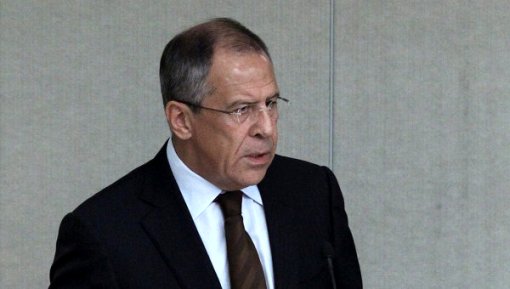
Moscow not to recall ambassador to Tokyo over Kurils row, says Foreign Minister Sergei Lavrov


Russian Foreign Minister Sergei Lavrov

November 02, 2010 (KATAKAMI / RIA NOVOSTI) --- Russia will not recall its ambassador to Japan following a diplomatic row over the disputed Kuril Islands, Russian Foreign Minister Sergei Lavrov said on Tuesday.

The dispute over four of the islands, which both countries have laid claim to since they were occupied by the Soviet Union at the end of World War II, was sparked when Russian President Dmitry Medvedev visited Kunashir Island on Monday.

Earlier on Tuesday, Japan announced it was temporarily recalling its ambassador to Russia, Masaharu Kono.

Lavrov said Japan's move was its own domestic affair.

"On the whole, we are puzzled by the continuing escalation of emotions from the Japanese side," the minister said, adding that Medvedev was planning to visit another Kuril Islands.

Prior to Medvedev's visit, Japan said the arrival of the Russian leader could complicate bilateral relations, but Russia's Foreign Ministry rejected the comments saying Medvedev "defines the routes of trips across his country on his own."

The visit was the first trip by a head of state of Russia or the former Soviet Union to the South Kuril Islands.

Tokyo's continued claim over four South Kuril Islands (Iturup, Kunashir, Shikotan, and Habomai) to the northeast of Japan has so far prevented Russia and Japan from signing a formal peace treaty to end World War II hostilities.


OSLO, November 2 (RIA Novosti)

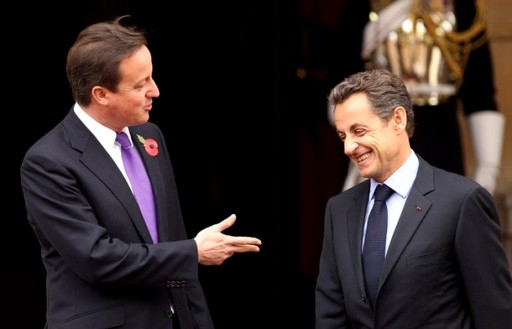
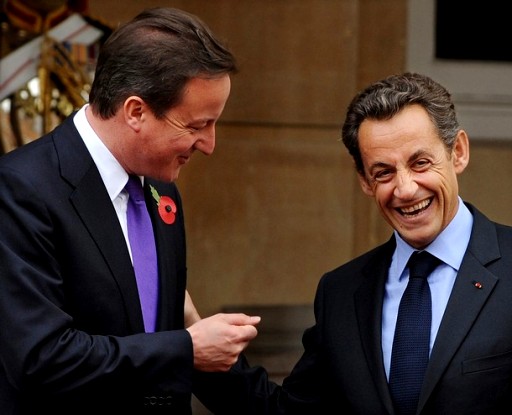
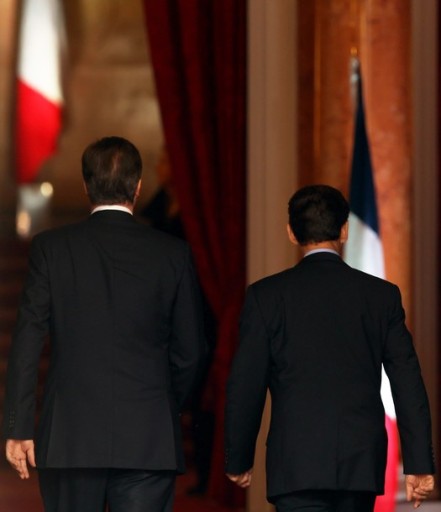
Photostream : British Prime Minister David Cameron meets French President Nicolas Sarkozy


French President Nicolas Sarkozy meets with British Prime Minister David Cameron at Lancaster House on November 2, 2010 in London, England. Mr Cameron and Mr Sarkozy are attending a Franco-British Summit and are likely to agree to a new military expeditionary joint force. (Photo by Dan Kitwood/Getty Images)

French President Nicolas Sarkozy (R) is welcomed by British Prime Minister David Cameron to Lancaster House in central London, for an Anglo-French summit on November 2, 2010. Britain and France usher in an unprecedented era of cooperation at a summit in London Tuesday with a deal to create a joint military force and share aircraft carriers and nuclear testing facilities. Cameron and Sarkozy will sign two treaties which they say will allow both nations to remain global players while cutting defence budgets following the financial crisis.  (Photo by BEN STANSALL/AFP/Getty Images)

French President Nicolas Sarkozy (R) meets with British Prime Minister David Cameron and enters Lancaster House on November 2, 2010 in London, England. Mr Cameron and Mr Sarkozy are attending a Franco-British Summit and are likely to agree to a new military expeditionary joint force. (Photo by Dan Kitwood/Getty Images)

French President Nicolas Sarkozy (L), and British Prime Minister David Cameron, pose for photographers ahead of an Anglo-French summit at Lancaster House on November 2, 2010 in London. Britain and France will sign defence treaties at a summit in London setting out cooperation on issues including military planes and aircraft carriers, Prime Minister David Cameron said. (Photo by Leon Neal/WPA Pool/Getty Images)

French President Nicolas Sarkozy (4th L), and British Prime Minister David Cameron (4th R), pose for photographers ahead of an Anglo-French summit at Lancaster House in central London on November 2, 2010. Britain and France will sign defence treaties at a summit in London Tuesday setting out cooperation on issues including military planes and aircraft carriers, Prime Minister David Cameron said. (Photo by LEON NEAL/AFP/Getty Images)

U.S. says backs Japan in dispute with Russia over Kuril Islands


Russian President Dmitry Medvedev sparked a diplomatic row with Japan when he visited Kunashir Island, near Japan's northernmost Hokkaido Island, on Monday.


November 02, 2010 (KATAKAMI / RIA NOVOSTI) --- The United States backs Japan in its dispute with Russia over the Kuril Islands and keeps on calling on both countries to reach a compromise, a spokesman for the U.S. Department of State said.

"We are quite aware of the dispute. We do back Japan regarding the Northern Territories. The United States for a number of years has encouraged Japan and Russia to negotiate an actual peace treaty, regarding these and other issues," Philip Crowley told a daily press briefing.

Russian President Dmitry Medvedev sparked a diplomatic row with Japan when he visited Kunashir Island, near Japan's northernmost Hokkaido Island, on Monday.

The visit was the first trip by a head of state of Russia or the former Soviet Union to the South Kuril Islands. The Soviet Union seized four of the Kuril Islands (Iturup, Kunashir, Shikotan, and Habomai) from Japan at the end of World War II and Tokyo has demanded their return ever since. The dispute has prevented Russia and Japan from signing a formal peace treaty.

Japan said the move was "regrettable," and had "hurt the Japanese people's sentiments."

Russian Foreign Minister Sergei Lavrov said on Saturday that he saw "no connection" between the trip and Russian-Japanese relations.


WASHINGTON, November 2 (RIA Novosti)

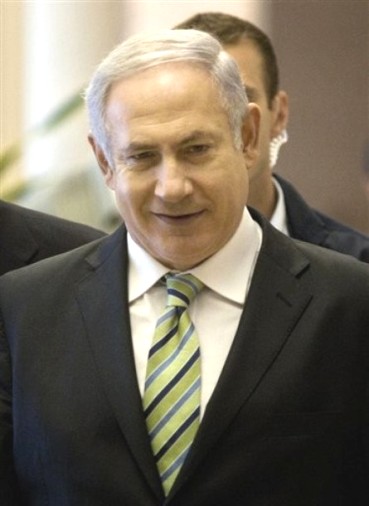
Netanyahu says no realistic US proposals to freeze settlements


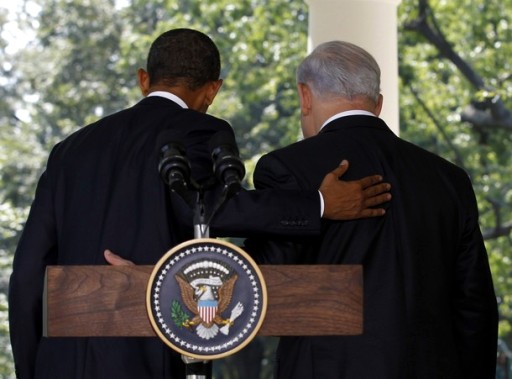
File photo : U.S. President Barack Obama and Israel's Prime Minister Benjamin Netanyahu (R) walk from the podium after delivering statements to the press from the Colonnade outside the Oval Office of the White House in Washington September 1, 2010. (Getty Images / REUTERS/Jason Reed )

November 02, 2010 (KATAKAMI / Rantburg.Com / KUNA) -- Israeli Prime Minister Benjamin Netanyahu said Monday there were no American proposals to freeze settlement construction in the West Bank, noting that the political situation was in a stalemate status.

"The American administration is busy with the Congress elections so they will not discuss the settlement freeze now, and until now there is no realistic American proposal to end this crisis," Netanyahu said during a session of the Likud bloc members at the Knesset.

Netanyahu, quoted by the Yediot Ahronot website, said "The Paleostinians' taking a unilateral step to declare the Paleostinian state will make the two parties pay high prices and these steps will not solve the dispute." Paleostinian Authority President the ineffectual Mahmoud Abbas said last Thursday the Paleostinians could submit a request to the UN and the US to recognize a Paleostinian state on the pre-1967 war borders if the direct peace talks with the Israelis failed to resume.

(MS)
Political Parties Blasted for Indonesia's Mount Merapi Volcano Aid


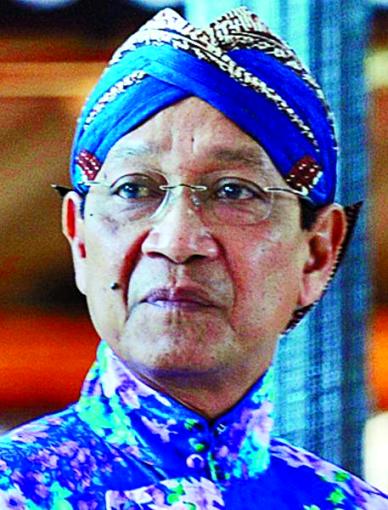
Yogyakarta Governor Sri Sultan Hamengkubuwono X


November 02, 2010 Sleman, Yogyakarta (KATAKAMI / THE JAKARTA GLOBE) ---  Yogyakarta Governor Sri Sultan Hamengkubuwono X has criticized Indonesian political parties for potentially increasing the trauma suffered by victims displaced by the Merapi volcano disaster.

“At the moment, the problem is that ambulances and other vehicles are flying the flags of certain organizations and political parties, and sound their sirens too loudly,” Hamengkubuwono said at the main disaster mitigation post in Sleman on Monday.

He said the ambulances and vehicles passing by the post impacted on the concentration on members of the Disaster Mitigation Agency and had the potential to traumatize the evacuees.

“Moreover, the ambulances are not carrying patients who need emergency aid. So please, do not exaggerate in helping the victims, it may cause panic,” the governor said.

Hamengkubuwono said the Yogyakarta provincial administration, as well as the Sleman district administration, would not hinder volunteers and donors from helping the Merapi victims.

“They are very welcome to help the victims. It’s up to them to deliver the aid to the main post, directly to the shelters or to the evacuees themselves,” he said. “We hope the bureaucracy will not pose an obstacle to them. The most important thing is that the help must be rendered whole-heartedly.”

Political parties have previously been criticized for politicizing the Situ Gintung disaster on the outskirts of Jakarta just prior to the last year's legislative and presidential elections.

(MS)

Photostream : Indonesia's Mount Merapi volcano spews hot ash again


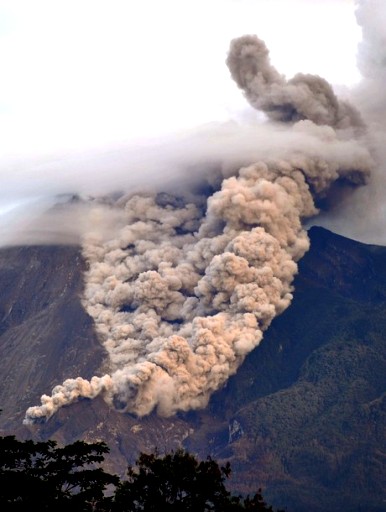
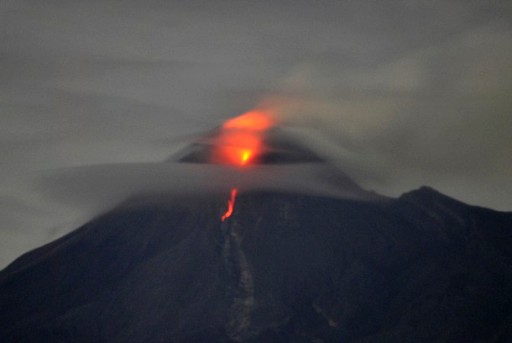
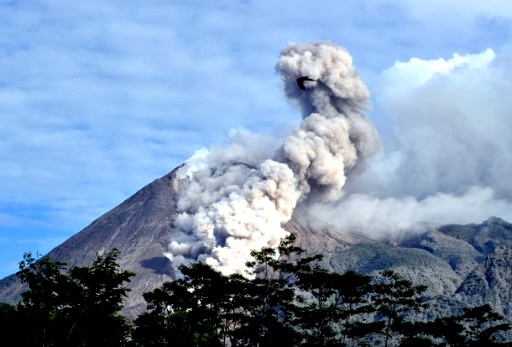
In a picture taken from Kemalang, Klaten, in central Java Mount Merapi spews hot clouds of ash on November 2, 2010. Mount Merapi in Indonesia' s Central Java province early Tuesday spewed cloud of hot ash again, but there is no reports of casualties and material losses. The new blasts occurred at 5:25 am and 5:32 am but caused no panic among the residents living near the volcano, which has erupted dozens of time since October 26. The hot ash spread toward southern direction by 3 kilometers, Metro TV reported. The volcano's eruptions have killed 38 people and forced about 70,000 people take shelter, officials said on Monday. Photo : Getty Images / AFP PHOTO / ADEK BERRY

In a picture taken from Kemalang, Klaten, in central Java Mount Merapi spews lava on November 2, 2010. Mount Merapi in Indonesia' s Central Java province early Tuesday spewed cloud of hot ash again, but there is no reports of casualties and material losses. The new blasts occurred at 5:25 am and 5:32 am but caused no panic among the residents living near the volcano, which has erupted dozens of time since October 26. The hot ash spread toward southern direction by 3 kilometers, Metro TV reported. The volcano's eruptions have killed 38 people and forced about 70,000 people take shelter, officials said on Monday. (Photo by ADEK BERRY/AFP/Getty Images)

In a picture taken from Ndeles, Klaten, in central Java Mount Merapi spews hot clouds of ash on November 2, 2010. The new blasts occurred at 5:25 am and 5:32 am but caused no panic among the residents living near the volcano, which has erupted dozens of time since October 26. The hot ash spread toward southern direction by 3 kilometers. The volcano's eruptions have killed 38 people and forced about 70,000 people take shelter, officials said on Monday. With an altitude of 2,968 meters, mount Merapi is one of Indonesia's most active volcanoes. The previous eruption of Mount Merapi in 2006 killed two people. A 1994 eruption claimed 60 lives. A major eruption in 1930 killed more than 1,000 people. (Photo by ADEK BERRY/AFP/Getty Images)

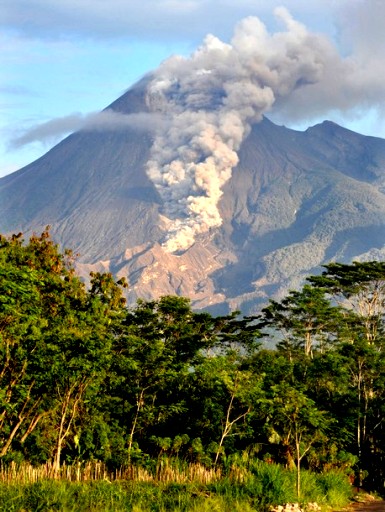
In a picture taken from Kemalang, Klaten, in central Java Mount Merapi spews hot clouds of ash on November 2, 2010. The new blasts occurred at 5:25 am and 5:32 am but caused no panic among the residents living near the volcano, which has erupted dozens of time since October 26. The hot ash spread toward southern direction by 3 kilometers. The volcano's eruptions have killed 38 people and forced about 70,000 people take shelter, officials said on Monday. With an altitude of 2,968 meters, mount Merapi is one of Indonesia's most active volcanoes. The previous eruption of Mount Merapi in 2006 killed two people. A 1994 eruption claimed 60 lives. A major eruption in 1930 killed more than 1,000 people. (Photo by ADEK BERRY/AFP/Getty Images)


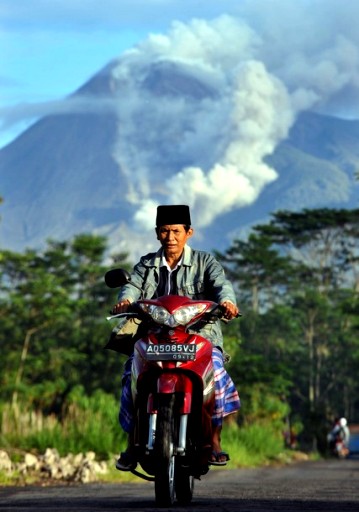
A man rides a motorcycle as Mount Merapi spews hot clouds of ash in the background at Kemalang, Klaten, in central Java on November 2, 2010. The new blasts occurred at 5:25 am and 5:32 am but caused no panic among the residents living near the volcano, which has erupted dozens of time since October 26. The hot ash spread toward southern direction by 3 kilometers. The volcano's eruptions have killed 38 people and forced about 70,000 people take shelter, officials said on Monday. With an altitude of 2,968 meters, mount Merapi is one of Indonesia's most active volcanoes. The previous eruption of Mount Merapi in 2006 killed two people. A 1994 eruption claimed 60 lives. A major eruption in 1930 killed more than 1,000 people. (Photo by ADEK BERRY/AFP/Getty Images)

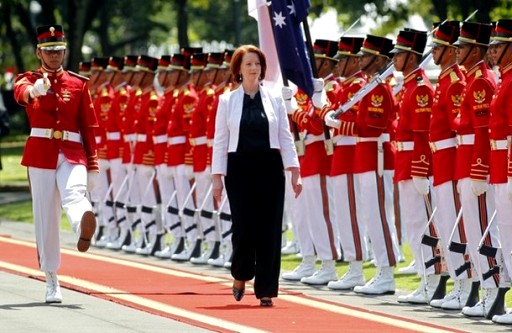
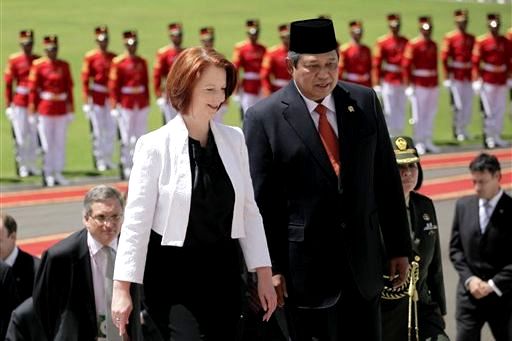
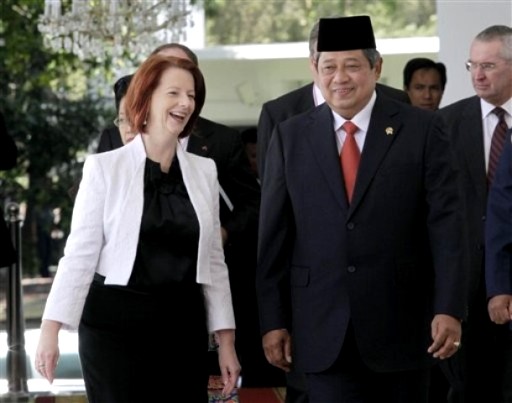
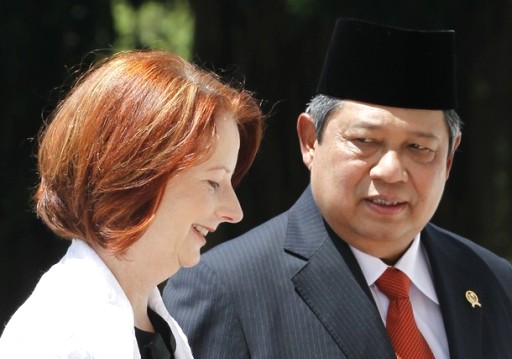
Photostream : Australia's Prime Minister Julia Gillard meets Indonesian President Yudhoyono


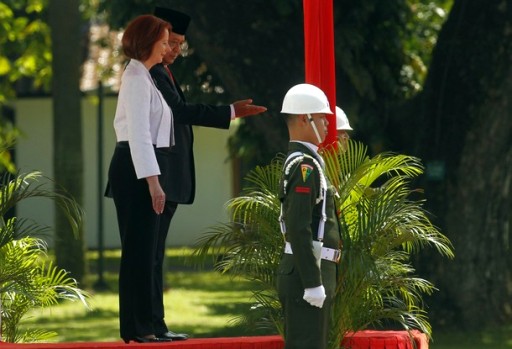
Australia's Prime Minister Julia Gillard inspects a guard of honour at the Merdeka Palace in Jakarta during her official visit to Indonesia November 2, 2010. REUTERS/Supri (INDONESIA)

Australian Prime Minister Julia Gillard, left, walks with Indonesian President Susilo Bambang Yudhoyono prior to their meeting at Merdeka Palace in Jakarta on Tuesday. (AP/Dita Alangkara/Jakarta Post)

Australian Prime Minister Julia Gillard, left, walks with Indonesian President Susilo Bambang Yudhoyono prior to their meeting at Merdeka Palace in Jakarta, Indonesia, Tuesday, Nov. 2, 2010. (Getty Images / AP Photo/Dita Alangkara)

Australia's Prime Minister Julia Gillard (L) walks with Indonesia's President Susilo Bambang Yudhoyono at Merdeka Palace in Jakarta during her state visit to Indonesia November 2, 2010. (Getty Images / REUTERS/Enny Nuraheni )

Australia's Prime Minister Julia Gillard (L) is invited to inspect the guard of honour by Indonesia's President Susilo Bambang Yudhoyono at the Merdeka Palace in Jakarta during her state visit to Indonesia November 2, 2010. (Getty Images / REUTERS/Supri )

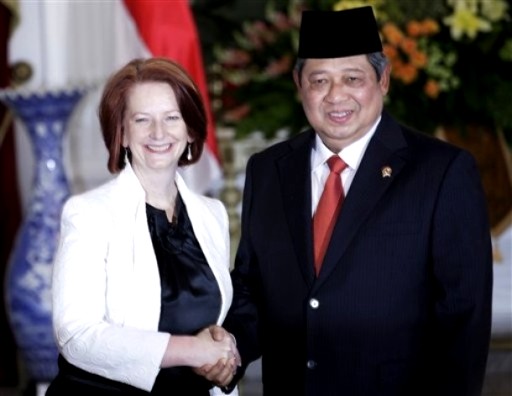
Australian Prime Minister Julia Gillard, left, shakes hands with Indonesian President Susilo Bambang Yudhoyono prior to their meeting at Merdeka Palace in Jakarta, Indonesia, Tuesday, Nov. 2, 2010. (Getty Images / AP Photo/Dita Alangkara)

President Yudhoyono to visit Merapi victims after meeting with Prime Minister Julia Gillard


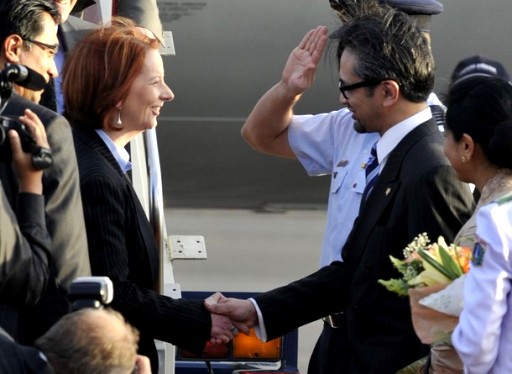
Australian Prime Minister Julia Gillard (L) shake hands with Indonesian Foreign Minister Marty Natalegawa (R) on arrival at Jakarta airport on November 1, 2010. Gillard will be meeting Indonesian President Susilo Bambang Yudhoyono on November 2. AFP PHOTO / ROMEO GACAD (Photo by ROMEO GACAD/AFP/Getty Images)

November 02, 2010 (KATAKAMI / THE JAKARTA POST) --- President Susilo Bambang Yudhoyono is scheduled to fly to Yogyakarta later today to meet people displaced by Mt. Merapi multiple eruptions in the past few days.

The President is slated to fly to Yogyakarta at about 2 p.m. Tuesday, after meeting with visiting Australian Prime Minister Julia Gillard, Tempointeraktif.com reported Tuesday.

Yudhoyono earlier said that he had contacted governors of Yogyakarta and West Java, to make sure that people displaced by the eruption are taken care of.

"I ordered (the two governors) to try their best to save the lives of our brothers and sisters around Mt. Merapi," he said.

He also called on the people to improve their preparedness in the face of multiple disasters, considering that Indonesia is prone to natural disasters.

"We have to change the way we see disasters in this country. Our country is prone to natural disasters such as earthquake, tsunami and volcano eruption. When we are aware of our geography, we have to do whatever we can do for our survival to face these disasters," he said.

Yudhoyono cut short his visit to Vietnam and returned home to visit victims of tsunami disaster in West Sumatra last weekend, and flew back to Vietnam to attend the Association of Southeast Asian Nations (ASEAN) summit.

(MS)

British Foreign Secretary William Hague planning secret Iran talks during Israel trip


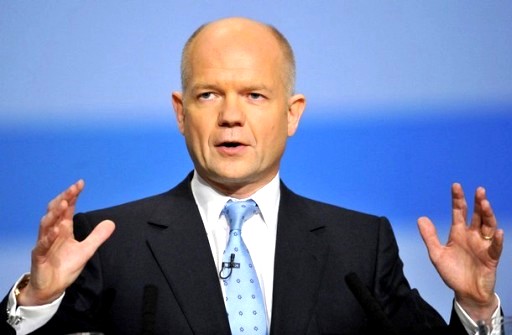
British Foreign Secretary William Hague

November 02, 2010 (KATAKAMI / HAARETZ) --- William Hague arrives in Israel on Tuesday for his first visit since being appointed foreign secretary in Britain's recently elected Conservative government.

British Foreign Secretary William Hague, who is scheduled to arrive in Israel on Tuesday evening, will hold a secret roundtable discussion on the Iranian nuclear program on Wednesday morning with a long list of senior Israeli officials involved in this issue. 

This is Hague's first visit to Israel since being appointed foreign secretary in the recently elected Tory government, and the roundtable discussion is being held at his request. His goal is both to gain an in-depth understanding of the Israeli government's positions on this issue and to hear assessments of Iran's nuclear program firsthand from senior Israeli defense and intelligence officials. 

The closed meeting is scheduled to take place at the British ambassador's residence in Ramat Gan, and those invited include Mossad chief Meir Dagan and the director general of the Israel Atomic Energy Commission, Shaul Chorev. Other Israelis on the guest list include Deputy Foreign Minister Daniel Ayalon, Intelligence and Atomic Energy Minister Dan Meridor and Strategic Affairs Minister Moshe Ya'alon. 

But it seems that at least some of the ministers will skip the roundtable, because it apparently will conflict with a cabinet meeting. 

The British embassy said Britain shares Israel's concern about the threat posed by nuclear weapons in Iran's hands and holds regular discussions with Israel about this issue, but cannot at this stage discuss the details of the secretary's schedule for the visit. 

Britain and France have spearheaded the battle against Iran's nuclear program in the European Union. After the UN Security Council approved a fourth round of sanctions against Tehran in June, London and Paris worked hard to get the EU to approve additional sanctions of its own against Iran, which it did in late July. 

Israel and Britain cooperate very closely on Iran in both the intelligence and the diplomatic spheres. This cooperation is particularly noteworthy given the two countries' deep differences on the Palestinian issue.
And Britain's new ambassador to Israel, Matthew Gould, is an expert on the Iranian nuclear issue. He dealt with it both when he served as deputy head of mission in Britain's embassy in Tehran a few years back and in his most recent post before coming to Israel, as principal private secretary to then-foreign secretary David Miliband. 

One thing Hague will be looking for at Wednesday's roundtable is Israel's assessment of how effective the new sanctions against Iran have been. 

Two weeks ago, Ayalon and a group of senior Israeli intelligence and defense officials were in Washington for a strategic dialogue that dealt solely with the Iranian issue. At that meeting, the Americans opined that the sanctions had succeeded beyond their expectations, thanks to widespread cooperation by many countries worldwide. 

The Israelis agreed that the sanctions had been more effective than anticipated and were causing economic hardship in Iran that had increased political pressure on its government. 

Nevertheless, the Israelis stressed, there is no evidence so far that the sanctions are causing Tehran to rethink its nuclear program, and they certainly have not caused it to stop enriching uranium. That is undoubtedly the assessment they will repeat to Hague tomorrow. 

(MS)

Boehner vs. Obama


Rep. John Boehner

November 01, 2010 (KATAKAMI / CNN) - He is poised to become the most powerful Republican in Congress if the GOP takes control of the House Tuesday.

And Rep. John Boehner's ramping up the rhetoric in anticipation, going after the president.

"We have a president in the White House who referred to Americans who disagree with him as 'our enemies,'" Boehner said Monday. "When Ronald Reagan, George Bush, Bill Clinton and George W. Bush used the word 'enemy,' they reserved it for global terrorists and foreign dictators – enemies of the United States."

Boehner was commenting on a radio interview Obama conducted last Monday on the Spanish-language radio station where he said "If Latinos sit out the election instead of saying, 'We're gonna punish our enemies, and we're gonna reward our friends who stand with us on issues that are important to us' – if they don't see that kind of upsurge in voting in this election – then I think it's going to be harder."

But on Monday Obama walked the comments back. In an interview with radio host Michael Baisden he said he probably should have used the word "opponent" instead of enemy.

However, that didn't stop Boehner from continuing his criticism of the president's word choice at a rally in Ohio for Rep. Rob Portman and Republican gubernatorial candidate John Kasich.

"He uses it for people who disagree with his agenda of bigger government," Boehner said. "Mr. President, there's a word for people who have the audacity to speak up in defense of freedom, the Constitution, and the values of limited government that made our country great. We don't call them 'enemies.' We call them patriots."

He also took the time to encourage voter turnout, which was accompanied with another little dig at the president.

"The president has been here a dozen times in the past year," Boehner said. "This is about President Obama trying to get reelected in two years. So if you want to send President Obama a big loud message, vote for John Kasich tomorrow."

(MS)

Medvedev congratulates Brazil's first female president


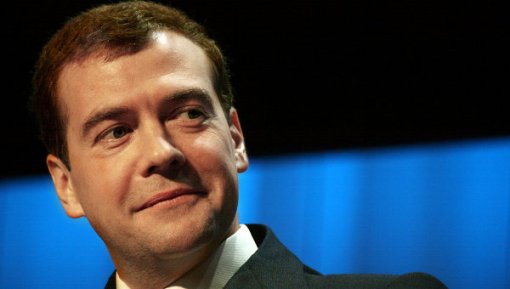
Russian President Dmitry Medvedev congratulates Brazil's first female president

November 01, 2010 (KATAKAMI / RIA NOVOSTI) --- Russian President Dmitry Medvedev congratulated Brazil's first female president, Dilma Rousseff, on Monday, the Kremlin said.

The ruling Workers Party's candidate was elected Brazil's president on Sunday, after winning 55.49 percent of the vote.

"Please accept my sincere congratulations on your clear-cut victory...Over the past few years we have seen tangible results in the development of friendship and cooperation between Russia and Brazil," Medvedev's message read.

Brazil's outgoing president, Lula de Silva, was first elected in 2002 and was re-elected in 2006. Under the Brazilian Constitution, the president can only be elected for two consecutive four-year terms.

D

MOSCOW, November 1 (RIA Novosti)

Republicans Hope to Win Back Majority in Congress


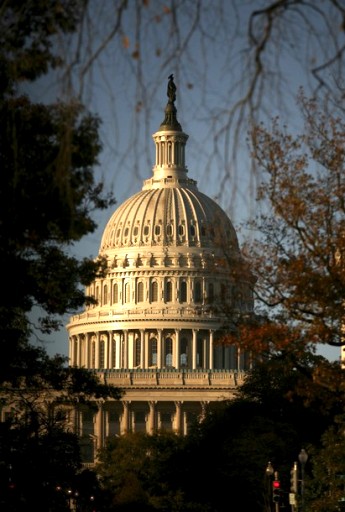
The U.S. Capitol is seen at sunset the day before mid-term elections in Washington November 1, 2010. (Getty Images / REUTERS/Molly Riley )

November 01, 2010  (KATAKAMI / VOA) --- Experts say Tuesday’s midterm elections could shift the balance of power in the U.S. Congress.

All 435 seats in the U.S. House of Representatives and 37 of the 100 Senate seats are at stake. The race also includes 37 state governorships and leadership of some U.S. territories.

Polls predict the Republican Party will make big gains, possibly ending the Democrats’ majority in one or both houses of Congress. Experts say Republicans could likely gain the 39 seats they need to achieve a majority in the House of Representatives, but odds are not as good that they will gain the 10 seats they would need for a majority in the Senate.

If Republicans win a majority in either or both houses, it could make the next two years difficult for President Barack Obama, a Democrat. Lawmakers could block further White House-backed initiatives or pass bills to try to repeal the president’s health care reform, despite Mr. Obama’s veto authority.
Turnout for midterm elections is usually smaller than for a presidential vote.

Democrats are seeking to energize the blocs that helped propel Mr. Obama to victory in 2008 — young voters, women and minorities. Republicans are hoping to turn out voters who are dissatisfied over the ailing economy and high national unemployment rate.

Republicans lost control of Congress in 2006.


Some information in this story was provided by AP.

Big Republican Gains Predicted in US Election


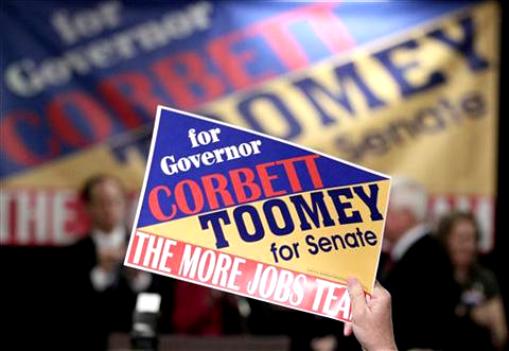
A supporter holds up a campaign sign as Pennsylvania Republican gubernatorial candidate Tom Corbett, Lt. Gov. candidate James Cawley and Pennsylvania Republican Senate candidate Senate Pat Toomey, appear during a rally in Pa., 01 Nov. 2010. (VOA)

November 01, 2010 (KATAKAMI / VOA) --- History shows that the party holding the White House usually loses congressional seats in a new president's first midterm election, and the polls and political experts certainly point to that on Tuesday.

In fact, a number of well-respected political analysts now predict that Republicans will likely win more than 50 seats in the House of Representatives currently held by Democrats, easily putting them past the threshold of the 39 additional seats they need to retake control of the House of Representatives.  All 435 House seats will be at stake, but experts say only about one-quarter are truly competitive.

Republicans are also expected to make gains in the Senate, but most experts say they will likely fall short of gaining the 10 seats they need to reclaim a majority there.  This year, 37 of the 100 Senate seats are up for election.
Final campaiging
Leaders from both parties were trying to rally supporters in the final hours of the campaign, including President Barack Obama who spoke in his home state of Illinois.

"If everybody who fought for change in 2008 shows up in 2010, we will win this election," declared the president.

Republicans expect to benefit from public-opinion polls showing Americans are worried about the economy and jobs and ready for change in Congress.

Former Republican Congressman Dick Armey has been busy as an organizer of the conservative and libertarian Tea Party movement for the past year, a grassroots group that is expected turn out in big numbers for Republican candidates on Election Day.

"The Republican Party, bless their heart, finally learned in this last year to listen to America," said Armey," and that is why the Republican Party is going to win!"
Republicans lost control of Congress to Democrats in the 2006 midterm elections and Democrats bolstered their majorities in the 2008 election when Mr. Obama won the presidency.
The force of a bad economy
The poor domestic economy has opened the door to a Republican resurgence in Congress this year, says University of Virginia political expert Larry Sabato.

"Look, 39 seats, which is what they need to take over, seemed difficult to impossible a year ago," Sabato points out.  "And now they are on the verge of a comfortable retaking of the House after just four years of Democratic control."

Tuesday's election could have huge political stakes for President Obama and his next two years in office.  Republican control of one or both houses would make it easier for Republicans to block domestic initiatives, and could give congressional Republicans a more influential voice on foreign policy, including the war in Afghanistan.

Republicans may begin focusing on cutting the budget and repealing President Obama's health-care law once the new Congress is seated in January, says Thomas Mann, a political scholar at the Brookings Institution in Washington.

"The economy is in tough shape and so it means we are going to have some pretty aggressive Republicans coming to town, some associated with the Tea Party, who are going to raise some hell and try to repeal some programs passed under President Obama in his first two years," Mann says.

In addition to the House and Senate races, 37 of the 50 states will hold elections for governor, and the experts predict that several new Republican governors will be inaugurated in January as well.

(MS)

Clinton Makes Bid to Improve Ties with Muslim-Majority Malaysia


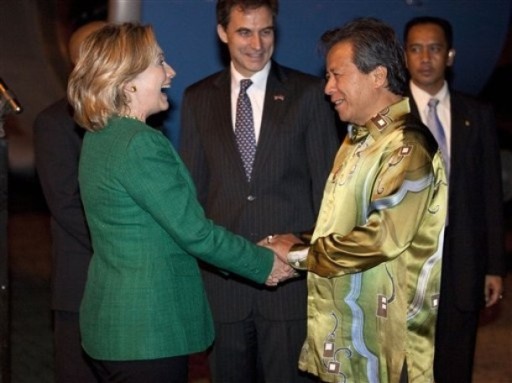
U.S. Secretary of State Hillary Rodham Clinton, left, smiles after being received by Malaysian Foreign Minister Anifah Aman at SkyPark Subang Terminal on Monday, Nov. 1, 2010 in Subang, Malaysia. (Getty Images /AP Photo/Evan Vucci, Pool)

November 01, 2010 (KATAKAMI / VOA) --- U.S. Secretary of State Hillary Clinton is in Malaysia for talks on improving relations with that Muslim-majority nation as she continues a tour of Asia.

Clinton arrived in the capital, Kuala Lumpur, late Monday, from Cambodia. On Tuesday, she is expected to hold meetings with her Malaysian counterpart Anifah Aman, and with Deputy Prime Minister Muhyiddin Yassin in place of Prime Minister Najib Razak, who is ill.

Ahead of Clinton’s visit, her top diplomat for Asia, Kurt Campbell, said Malaysia has made “enormous progress” on issues such as proliferation of weapons, and political coordination and strategic dialogue with the United States. He said “few nations” have come as far as Malaysia in terms of relations with the U.S.

Clinton also is due to hold talks with Malaysian opposition leader Anwar Ibrahim, who is on trial on sodomy charges that could see him jailed for years.

He previously served six years in prison on separate sex and corruption offenses until being released in 2004

Malaysia’s official Bernama news agency said Clinton’s delegation also will sign an agreement with Kuala Lumpur on science and technology cooperation.

Secretary Clinton also is scheduled to engage in public diplomacy with Malaysians by speaking at the International Institute for Islamic Thought and Civilization in the capital.

She is the first U.S. secretary of state to make a bilateral visit to Malaysia since Warren Christopher in 1995. Then-U.S. Secretary of State Condoleezza Rice visited Malaysia in a multilateral context in 2006 to attend a regional forum.

Earlier in Cambodia’s capital Phnom Penh, Clinton expressed support for a U.N.-sponsored tribunal that is prosecuting the country’s former Khmer Rouge leaders. She said the tribunal’s work is “necessary to ensure a lasting peace.”

She also agreed to reopen talks on settling Cambodian debts to the United States of $445 million owed from the 1970s.


Some information in this story was provided by AFP.

PM Benjamin Netanyahu instructed security forces not to allow the Palestinian Authority to hold events in Jerusalem Territory


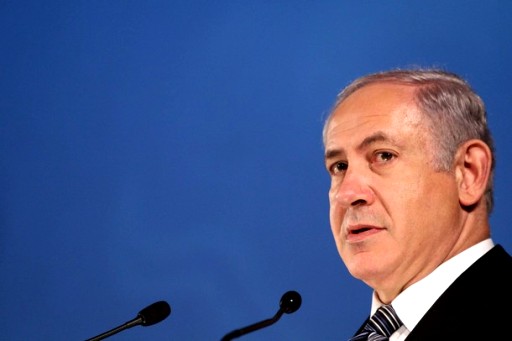
Israeli Prime Minister Benjamin Netanyahu (Photo : JACK GUEZ/AFP/Getty Images)

November 01, 2010 (KATAKAMI / YNET) --- PM's instruction follows order signed byInternal Security Minister Aharonovitch stating PA officials forbidden from taking part in political activities within Israeli territory without permit. 

Prime Minister Benjamin Netanyahu instructed the security establishment on Monday to prevent the Palestinian Authority from conducting ceremonies and organizing events anywhere within the limits of the Jerusalem Municipality.

About a year-and-a-half ago police succeeded in dispersing a number of small events held in east Jerusalem as part of the Palestinian Culture Festival, meant to declare the city "the capital of Arabic culture for 2009." More than 20 people were arrested, including Sheikh Raed Salah, the head of the Northern Branch of the Islamic Movement in Israel. 


The instruction followed an order signed by Internal Security Minister Yitzhak Aharonovitch stating that Israeli law prohibits Palestinian Authority officials from taking part in political activities within Israeli territory without first obtaining special permission.

Aharonovitch's order came following reports that Palestinian Prime Minister Salaam Fayyad was due to arrive in east Jerusalem on Tuesday to attend dedication ceremonies for two schools as well as a new road project. 

Then-Internal Security Minister Avi Dichter signed a number of injunctions banning a series of events that were scheduled to be held in Jerusalem, Nazareth and in other parts of the country under the auspices of the PA.

Dichter instructed Israel Police to "suppress any attempts by the PA to hold events in Jerusalem and throughout the rest of the country." According to the minister, the events would constitute a violation of the interim agreement between Israel and the Palestinians, which includes a clause that forbids the PA from organizing events in Israeli territory.

(MS)

Israeli Prime Minister Benjamin Netanyahu Will Attend 2010 General Assembly in New Orleans


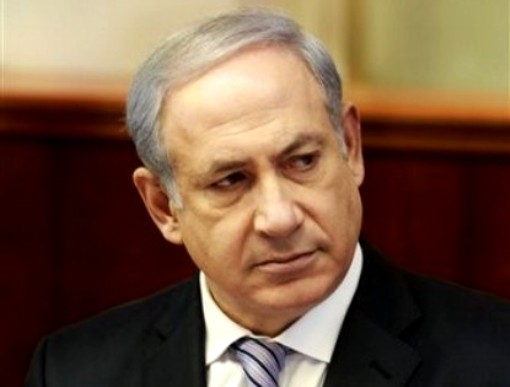
Israeli Prime Minister Benjamin Netanyahu chairs the weekly cabinet in Jerusalem, Sunday, Oct. 31, 2010. Netanyahu says he is heading to the U.S. next week to discuss Mideast peace efforts with Vice President Joe Biden. (Getty Images / AP Photo/Jim Hollander, Pool)

NEW YORK, Nov. 1, 2010 /PRNewswire-USNewswire/ -- The Jewish Federations of North America will host Netanyahu at their annual conference running Nov. 7-10, along with U.S. Vice President Joe Biden, other leading political figures

The Jewish Federations of North America is pleased to announce that Israeli Prime Minister Benjamin Netanyahu will attend the 2010 General Assembly in New Orleans.

Prime Minister Netanyahu will headline a roster of major global figures at the 2010 General Assembly (GA) and the 2010 International Lion of Judah Conference (ILOJC), which run Nov. 7-10 in New Orleans. Along with Prime Minister Netanyahu, GA speakers will include Vice President Joe Biden, Israel's Defense and Deputy Prime Minister Ehud Barak and Israel's Ambassador to the U.S., Michael Oren.

Also speaking at the GA and the ILOJC is Israel's Leader of the Opposition, Tzipi Livni. Joining Livni at the ILOJC are Israel's former ambassador to the U.N. Gabriela Shalev and other VIPs.

Global Jewish leaders at the GA include Jewish Agency Chair and legendary Soviet Jewish activist Natan Sharansky and his wife Avital, American Jewish Joint Distribution Committee CEO Steven Schwager, and others.

"The entire Jewish Federation movement is thrilled to have Prime Minister Netanyahu joining us," said JFNA's President and CEO Jerry Silverman. "The Prime Minister will be joining an array of inspiring world leaders who will help make this a powerful and memorable GA."

Prime Minister Netanyahu has been a frequent participant at the largest annual gathering in the Jewish communal world, both as prime minister and minister in previous Israeli governments. Most recently he attended the 2009 GA in Washington, DC.

The General Assembly is the largest annual gathering of the North American Jewish community. The International Lion of Judah Conference occurs every other year in conjunction with the GA and is an event for leaders in women's philanthropy.

This year, the GA and ILOJC will attract more than 4,100 participants from around the world. The GA will feature cutting-edge programs such as the Jewish Futures Conference, a Global Day of Jewish Learning, a first-time day of service in partnership with Repair the World, and other top speakers including David Simon, creator of HBO's "The Wire" and National Jewish Book Award winner Rebecca Goldstein.

The ILOJC will also include a first-time service project – a literacy program in local schools in partnership with The PJ Library, Harold Grinspoon Foundation and Repair the World – and features leading women entertainers and speakers including singer Neshama Carlebach and comedian Judy Gold.

The Jewish Federation movement is the largest Jewish philanthropy collective in the world and the Jewish Federations of North America are dedicated to promoting awareness and involvement among the Jewish community in the United States and Canada.


SOURCE Jewish Federations of North America

PM Netanyahu: Settlement freeze issue on hold


Israeli Prime Minister Benjamin Netanyahu arrives at a Likud faction meeting in the Knesset, Israel's parliament, in Jerusalem, Monday, Nov. 1, 2010. (Getty Images / AP Photo/Sebastian Scheiner)

November 01, 2010 (KATAKAMI / Ynet) --- Prime Minister Benjamin Netanyahu tells Likud faction meeting US yet to offer anything in exchange for renewal of West Bank construction moratorium; says unilateral Palestinian declaration of statehood would "exact price from both sides".

There is no concrete American proposal regarding the renewal of a settlement construction freeze in the West Bank and the issue is on hold for the time being, Prime Minister Benjamin Netanyahu told a Likud faction meeting on Monday.


Asked by Knesset Member Tzipi Hotovely about the possibility that the Palestinian Authority would declare statehood without Israel's consent, Netanyahu said such a unilateral measure would "exact a price from both sides" and would not advance a solution to the conflict.

Last week the PM said any attempt to "bypass the direct negotiations by approaching international organizations would not promote a real peace process." Earlier, Ynet reported that Egypt's intelligence chief, Omar Suleiman, is set to arrive in Israel this week to meet with Netanyahu and President Shimon Peres.

The visit is aimed at renewing peace talks with the Palestinians, in light of the recent stalemate over Israel's refusal to renew the freeze in the West Bank's settlements.
During Monday's faction meeting, Netanyahu said the Americans have not offered anything in exchange for a settlement construction moratorium, adding, "We are not discussing it at this point."

The premier also said there was no truth to recent reports saying Israel would lease land in east Jerusalem and the Jordan Valley from the Palestinians as part of a comprehensive peace agreement.

(MS)

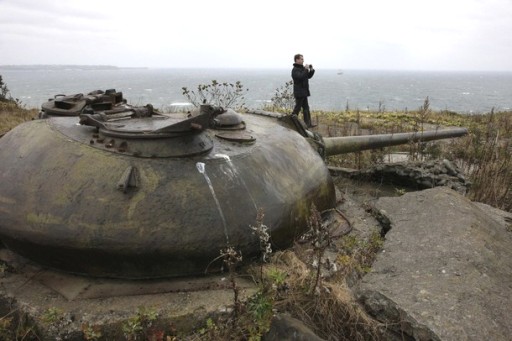
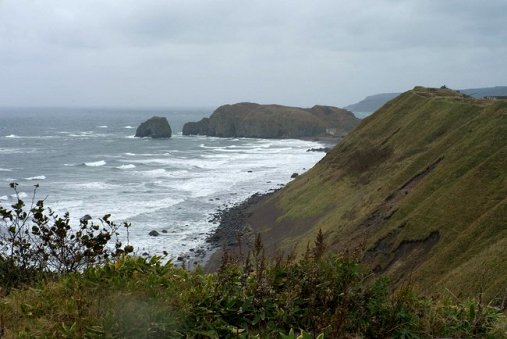
Russian President Dmitry Medvedev visited Kunashir, the southernmost of the Kuril Islands

Kunashir Island, November 1,2010 ( Photo by : DMITRY MEDVEDEV, Kremlin.Ru )

November 01, 2010 (KATAKAMI / KREMLIN.RU) --- The President began his working trip at a geothermal station located on the outskirts of Yuzhno-Kurilsk, and noted that it is a good example of small energy facility development, as the production cost of electricity generated at such stations is three times lower than that produced at diesel-powered stations. Mr Medvedev spoke with a duty officer at the station, and one of the matters raised was the expansion of television broadcasting in the area. Currently, the Kuril Islands’ residents receive only four channels, but the introduction of digital broadcasting would expand the local package to twenty TV channels.

The President then visited the Yuzhno-Kurilsk Fish Plant, which processes around 110 tons of fish a day. Governor of Sakhalin Region Alexander Khoroshavin, who accompanied the President, noted that there are some problems at the moment in supplying the plant’s products to the mainland. Mr Medvedev said that he would instruct his Presidential Plenipotentiary Envoy to the Far Eastern Federal District to look into this situation.

Mr Medvedev inspected the quay under construction in Yuzhno-Kurilsk Bay. The first stage of construction has been completed with a wharf built and energy supply lines installed. A three-storey passenger ship terminal will be launched in 2011.

The President also visited the home of a Yuzhno-Kurilsk family and asked their opinion of the situation in the local consumer market and the level of healthcare services.

Mr Medvedev was also shown a newly built kindergarten, which will open in November and offer pre-school education to 110 children.

During his conversation with Sakhalin Region Governor Alexander Khoroshavin, Dmitry Medvedev called for more intensive efforts to improve social conditions for life on the Kuril Islands.


(MS)