Friday, October 22, 2010

Photostream : Britain’s PM David Cameron and Deputy PM Nick Clegg visits Wellbeck Primary School in Nottingham

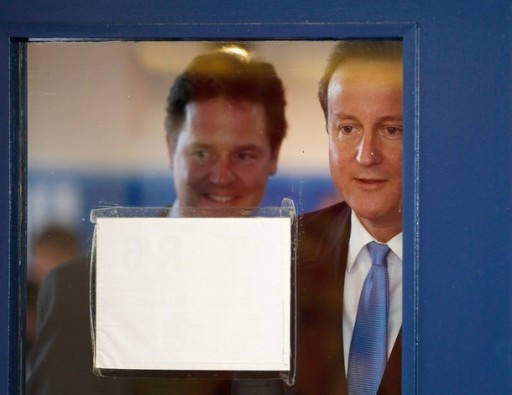
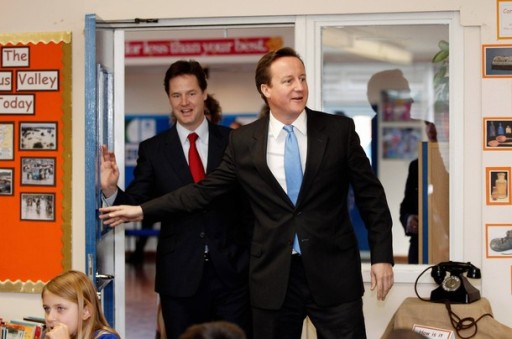
Britain's Prime Minister David Cameron waits outside a classroom with Deputy Prime Minister Nick Clegg during a joint visit to Wellbeck Primary School in Nottingham, in central England, October 21, 2010. (GETTY IMAGES / REUTERS/Christopher Furlong/Pool )
Britain's Prime Minister David Cameron (R) and Deputy Prime Minister Nick Clegg enter a classroom during a joint visit to Wellbeck Primary School in Nottingham, in central England, October 21, 2010. ( GETTY IMAGES / REUTERS/Christopher Furlong/Pool )
Britain's Deputy Prime Minister Nick Clegg (L) and Prime Minister David Cameron chat with pupils during a joint visit to Wellbeck Primary School in Nottingham, in central England, October 21, 2010. (GETTY IMAGES / REUTERS/Christopher Furlong/Pool )
Britain's Prime Minister David Cameron chats to pupils during a joint visit to Wellbeck Primary School in Nottingham with Deputy Prime Minister Nick Clegg, in central England, October 21, 2010. (REUTERS/Christopher Furlong/Pool / GETTY IMAGES)
Deputy Prime Minister Nick Clegg chats to year six pupils during a visit to Welbeck Primary School on October 21, 2010 in Nottingham, England. After yesterdays government spending review Chancellor George Osborne has insisted that cuts are 'fair' amidst claims that the poorest will be hit hardest. (Photo : Christopher Furlong - WPA Pool /Getty Images)

Carter: Hamas eager to renew talks for Shalit’s release

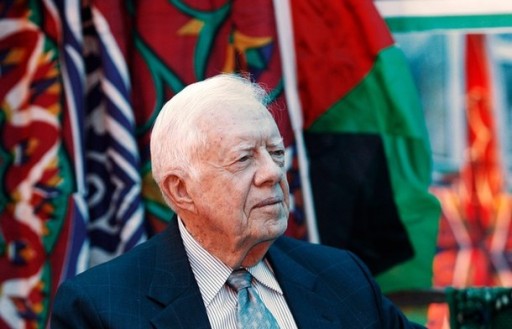
Member of the 'Council of Elders' Delegation former U.S. President Jimmy Carter listens to Palestinian residents (not seen) during a visit to the Elders Delegation in the Arab East Jerusalem neighborhood of Silwan on October 21, 2010 in East Jerusalem. The Elders, an independent council of retired world figures, visited the neighbourhood to speak with Palestinian residents whose homes are facing demolition. (Photo : Ammar Awad - Pool/Getty Images)


October 21,2 010 (KATAKAMI / HAARETZ) — The Elders hold meetings with Hamas officials, discuss stalled negotiations for Shalit’s release and Middle East peace talks. 

Former American President Jimmy Carter said Thursday that Hamas was interested in renewing negotiations for a prisoner swap deal in exchange for captive Israel Defense Forces soldier Gilad Shalit.
“They let us know… they are very eager to proceed,” Carter told reporters in East Jerusalem several days after meeting Hamas officials in Syria.

Top Hamas official Musa Abu Marzuq confirmed Saturday reports recently denied by the Hamas party that the German mediator, Gerhard Conrad, visited the coastal enclave two weeks ago in a bid to resume the frozen negotiations.

“They are very glad that the German negotiator has been back on the scene lately and that Israeli Prime Minister [Benjamin] Netanyahu has made some positive statements about a prisoner exchange,” Carter said, adding that “they maintained that they are very eager to have a swap but they are demanding the release of some prisoners that are not acceptable to the Israeli negotiators.”

The former president, who arrived in Israel with a delegation of former world leaders, The Elders, held meetings with Hamas officials in Syria, during which they discussed the stalled negotiations fro Shalit’s release and Middle East peace talks.

Shalit was kidnapped by Gaza militants in a cross-border raid in 2006 and has been held by Hamas since. Hamas has demanded the release of hundreds of Palestinian prisoners held in Israeli prisons in exchange for Shalit’s freedom.

The negotiations have been stuck in recent months following Conrad’s failure to reach a deal. The previous round of talks broke down due to Israel’s rejection of Hamas’s demands.

The Elders delegation includes, besides Carter, former Irish president Mary Robinson and former UN envoy Lakhdar Brahimi.
During the Elders’ visit to the East Jerusalem neighborhood of Silwan, carter criticized the Israeli occupation of the West Bank and said that East Jerusalem should be the capitol of a Palestinian state.
In the past week the Elders have visited Syria, Ramallah, Gaza, Egypt and Jordan. Carter, however, did not join the Elder’s visit to Gaza on Saturday.

During their visit on Syria on Tuesday, Carter called for Israel to lift completely its blockade on the Gaza Strip. Despite the U.S. and the European Union’s labeling of Hamas as a terrorist organization, The Elders met with exiled Hamas politburo leader Khaled Meshal, as Carter has done during previous regional visits.

Following their talks with Assad and Meshal, The Elders said people in the region have “very low expectations” that the current U.S.-led talks between Israel and the Palestinian Authority, which excluded Hamas, would succeed.

Moscow : Sergei Sobyanin officially sworn into office

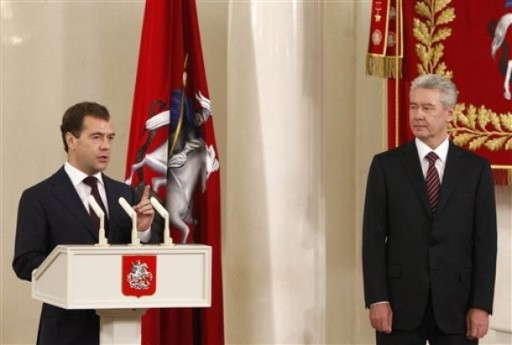
Russian President Dmitry Medvedev, left, delivers a speech while new Moscow Mayor Sergei Sobyanin listens to during an inauguration ceremony in Moscow, Thursday, Oct. 21, 2010. Prime Minister Vladimir Putin's chief of staff was named Thursday the Russian capital's new mayor in a move that would tighten federal control over Moscow's political scene and business interests. The appointment of Sergei Sobyanin underlined Putin's preeminence in Russian politics and would allow him to directly oversee Moscow's money flows that account for a sizable chunk of the nation's wealth. (Getty Images / AP Photo/Grigory Dukor, Pool)


MOSCOW, October 21 (KATAKAMI / Itar-Tass) — The newly-approved mayor of Moscow, Sergei Sobyanin, has been officially sworn into office.

Russian President Dmitry Medvedev is attending the inauguration ceremony held in the White Hall of the Moscow’s city administration building.

Earlier in the day, the lawmakers from the Moscow City Duma (or legislature) voted to vest Sobyanin, a presidential nominee, with the powers of the Moscow mayor.

Thursday, October 21, 2010

Photostream : Barack Obama and Bo, the Obama family dog

President Barack Obama throws a ball for Bo, the family dog, in the Rose Garden of the White House, Sept. 9, 2010. (Official White House Photo by Pete Souza)
http://dl7.glitter-graphics.net/pub/2868/2868297qznxwlhnux.gif
President Barack Obama and Bo, the Obama family dog, walk along the Colonnade of the White House, Sept. 10, 2010. (Official White House Photo by Pete Souza)
http://dl7.glitter-graphics.net/pub/2868/2868297qznxwlhnux.gif
Bo, the Obama family dog, pauses for a moment in the Rose Garden of the White House (Official White House Photo by Chuck Kennedy)
http://dl7.glitter-graphics.net/pub/2868/2868297qznxwlhnux.gif

Moscow Duma approves Sobyanin on post of Moscow mayor

Sergei Sobyanin

MOSCOW, October 21 (KATAKAMI / Itar-Tass) — Deputies to the Moscow Duma vested Sergei Sobyanin with the powers of Moscow mayor on Thursday.

Thirty two out of 35 members of the Moscow Duma (32 from United Russia and three from the Communist Party) voted for the approval of his candidature; 34 MPs attended the meeting.

Under the law, a minimum of 50 per cent of votes is needed for being approved on the post of mayor, i.e. no less than 18. The MPs voted by secret ballot.

Sobyanin has been vested with the powers of Moscow mayor for a period of five years.

UK Foreign Secretary stands in solidarity with Burmese political prisoner Ko Mya Aye

http://i.dailymail.co.uk/i/pix/2009/10/24/article-1222669-06BFEC52000005DC-29_468x303.jpg

October 21, 2010 (KATAKAMI / FCO.GOV.UK) — Foreign Secretary William Hague added his support to Amnesty International’s campaign for the release of Burma’s 2,100 political prisoners on 20 October.

The Foreign Secretary chose to highlight the case of Ko Mya Aye, aged 44, who is a leading member of the 88 Generation Students Group, an organisation synonymous with the long struggle for democracy in military-ruled Burma.

Ko Mya Aye is serving his second spell in detention having previously been imprisoned between 1989 and 1996 for taking part in the 1988 uprisings. Following the Saffron Revolution in 2007, Ko Mya Aye was re-arrested and sentenced to 65 years in prison. Reports suggest he has been tortured and is in poor health.

On hearing the details of Ko Mya Aye’s imprisonment, the Foreign Secretary said:

“The continued detention of Ko Mya Aye and of more than 2,100 other political prisoners in Burma is deplorable. I urge the military regime to release all political prisoners immediately and unconditionally, and respect the human rights of Burma’s people.”

Many of these prisoners are held in detention in locations far from their families in harsh conditions. It is not uncommon for some political prisoners to receive draconian sentences as long as 65 years.

Clinton voices support for UN tribunal in Lebanon

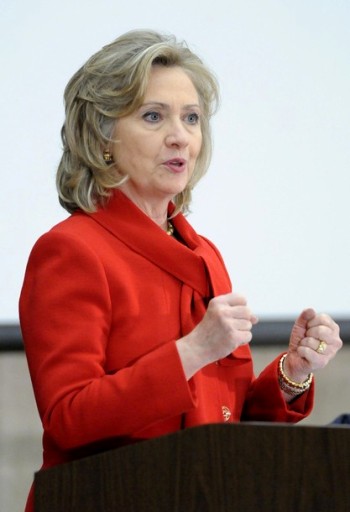
Secretary of State Hillary Rodham Clinton speaks at the Fifth Annual Gala of the American Task Force on Palestine in Washington, Wednesday, Oct. 20, 2010. (Getty Images / AP Photo/Carolyn Kaster)

October 21, 2010 BEIRUT (KATAKAMI / AP)  – U.S. Secretary of State Hillary Rodham Clinton says Lebanon should not tolerate any attempt to discredit the U.N. tribunal investigating the 2005 assassination of former Prime Minister Rafik Hariri.

The State Department said Clinton spoke to Lebanese President Michel Suleiman by phone Wednesday.
Speculation that the tribunal could indict members of Lebanon’s Iranian-backed Hezbollah has fueled a political crisis in the country. Hezbollah contends the tribunal has been poisoned by witnesses who have given false information.

Hariri, Lebanon’s most prominent politician after the 15-year civil war ended in 1990, was killed by a truck bombing.

Israeli settlers building 544 new homes

A Palestinian worker stands on a construction site in the West Bank Jewish settlement of Kiryat Arba, near Hebron, on Wednesday.


October 21, 2010 KARMEI TZUR, West Bank (KATAKAMI / MSNBC.COM / AP ) — Israeli settlers have begun building new homes at an extraordinary pace since the government lifted its moratorium on West Bank housing starts — almost 550 in three weeks, more than four times faster than the last two years.

And many homes are going up in areas that under practically any peace scenario would become part of a Palestinian state, a trend that could doom U.S.-brokered peace talks.

According to an Associated Press count, ground has been broken on 544 new West Bank homes since Sept. 26, when Israel lifted its 10-month freeze on most new settlement building.

The survey, while not comprehensive, marks the most extensive effort yet to quantify the construction. It was based on visits to 16 of the West Bank’s more than 120 settlements as well as phone calls to more than four dozen settlements and interviews with construction workers and mayors.

“This figure is alarming and is another indicator that Israel is not serious about the peace process, which is supposed to be about ending the occupation,” said Ghassan Khatib, spokesman for Palestinian President Mahmoud Abbas’ self-rule government in the West Bank.

Israeli Prime Minister Benjamin Netanyahu has played down the new construction, saying it “has no real effect on the map of a possible (peace) agreement.”

However, the renewed settlement construction has jeopardized peace talks relaunched only last month, with the Palestinians threatening to walk away if the freeze is not extended. And it could make the daunting task of partitioning the land even more difficult.

The building spurt of the past three weeks compares to average annual housing starts of about 2,000 in recent years, including just under 1,900 in 2009 and just over 2,100 in 2008, according to government figures. That is a rate of about 115 in three weeks, making the current pace more than four times faster.
The actual number is likely higher. When officials provided a range, the AP used the lowest figure. And it did not include 133 apartments a contractor said he was building in three settlements, because he did not say how many were already started.

The Israeli settlement watchdog Peace Now estimates there have been more than 600 housing starts and plans to release its own detailed report next week.

Much of the building activity witnessed by the AP involved leveling ground, and some settler leaders argue it is premature to define that as housing starts.

Asked about the AP count, a spokeswoman for the settler group Yesha Council said: “I prefer not to get into the numbers game because it’s misleading.”

About two-thirds of post-freeze work is preliminary and could be halted if the freeze is renewed, said the spokeswoman, Aliza Herbst.

Still, the scale of the construction is likely to harden Palestinian demands that a settlement freeze be reimposed as a condition for proceeding with the talks. Efforts by the United States to coax Israel into another building slowdown have so far failed.

In crisscrossing the West Bank, an AP team saw bulldozers and jackhammers tearing into rocky slopes in a number of locations.

One of the new building sites is in Karmei Tzur, a settlement with about 135 families located on the “Palestinian side” of the planned route of Israel’s West Bank separation barrier, seen by some in Israel as the basis for drawing Israel’s future border.

On Monday, jackhammers pulverized rocks on a barren slope as trucks carted off debris and heavy machinery drilled holes in preparation for pouring foundations. A woman answering the phone at the settlement’s main office said 56 new apartments were being built.

A drive through Kiryat Arba, home to more than 7,000 Israelis, revealed two construction sites, for a total of at least 22 apartments, according to Palestinian laborers. And in the settlement of Revava, bulldozers were seen leveling ground along a slope. A contractor at the site said his company is building 83 apartments there.

In Kiryat Arba, Revava and many other settlements visited by the AP, officials declined comment on construction. In two places, armed guards denied reporters entry.

Other settlement officials were more forthcoming.

Avi Roe, who heads the Binyamin regional council, which represents about one-third of the West Bank settlements, said he is aware of at least 200 housing starts in his area.

Another 344 housing starts were confirmed by AP visits to settlements and interviews with mayors, construction workers and other officials.

Netanyahu imposed the settlement curbs last November in a bid to draw the Palestinians to the negotiating table. Netanyahu, who leads a hard-line coalition dominated by pro-settler parties, has said the slowdown was a one-time gesture.

The Obama administration has been trying to persuade Israel to extend the freeze and is expected to step up the effort after next month’s midterm elections. Washington has floated the idea of a one-time two-month extension, during which Israelis and Palestinians would be asked to reach agreement on the future borders of a Palestinian state.

The Palestinians insist on a freeze for the duration of negotiations, saying two months is unrealistic to reach a border deal.

Nearly 300,000 settlers now live in the West Bank, along with 2.2 million Palestinians. Settlers have covered the territory — captured by Israel in the 1967 Mideast war, along with Gaza and east Jerusalem — with an increasingly intricate web of established communities and nearly 100 unauthorized hilltop outposts.

Despite the recent building spate, settlement leaders complain that approval for the largest construction projects is being held up. The Yediot Ahronot daily reported this week that construction of more than 3,700 apartments awaits the signature of Defense Minister Ehud Barak, who has final say in the West Bank.

“I’m pessimistic about the near future,” said Benny Kashriel, mayor of Maaleh Adumim, a settlement of 33,000 near Jerusalem. He said he hasn’t been able to start new construction since the end of the moratorium.
Medvedev says NATO has no aggressive intentions toward Russia

Dmitry Medvedev at a meeting with participants of the 46th Munich Security Conference in Moscow

October 20, 2010 (KATAKAMI / RIA NOVOSTI) — Russian President Dmitry Medvedev said on Wednesday that the opinion of many of his countrymen that NATO was hostile to Russia was “in many respects a mistake.”

“Relations between Russia and NATO have always been difficult,” Medvedev said at a meeting with participants of the 46th Munich Security Conference in Moscow. “We have a certain historical background.”

He agreed with conference participants that in Russia “there is the sense that NATO is some kind of aggressive element.”

“This is in many respects a mistake,” he went on.

“What is also evident is that Russia is often perceived by parts of the Western world, by ordinary people, as a country where there can be no democracy, whose leadership always adheres to authoritarian principles,” Medvedev said.

The Russian leader cited Russian-Polish relations, which have improved of late after many years of tension, as an example of how historical differences can be overcome.

The Munich conference, set up in 1962, is an international forum gathering politicians, diplomats, military, businessmen, scientists and public figures from over 40 countries. This is the first time that the conference has taken place in Russia.

GORKI, October 20 (RIA Novosti)

Wednesday, October 20, 2010

Boehner Congratulates Archbishops Burke & Wuerl on Cardinal Appointments by Pope Benedict XVI

John Boehner

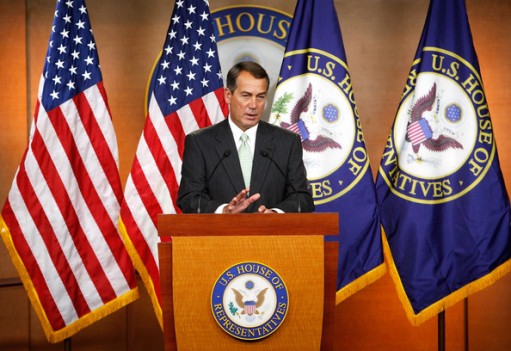
October 20, 2010. Washington (KATAKAMI / GOP LEADER.GOV) — House Republican Leader John Boehner (R-OH) today offered his congratulations to U.S. Archbishop Raymond L. Burke, prefect of the Apostolic Signature, and U.S. Archbishop Donald W. Wuerl of Washington, after Pope Benedict XVI announced their appointments to the College of Cardinals:

“In Archbishops Burke and Wuerl, Pope Benedict has selected men of God and loyal servants of the faithful to help lead our church around the world.  I am confident that these men of generous spirits and immense gifts will strengthen the bonds of ecumenical friendship in America, continuing the work of so many to protect life and lift up the hearts of the lonely, discouraged, and oppressed.  I congratulate them both.”

Pope says Church’s mission a duty of every Catholic

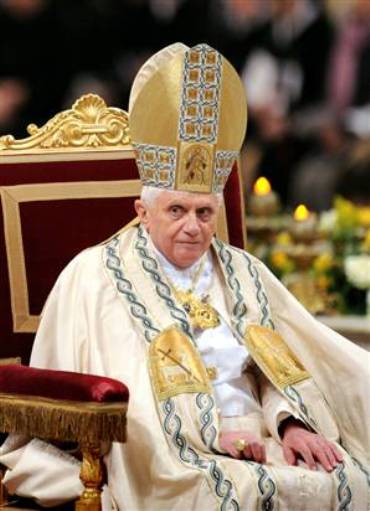
Pope Benedict XVI


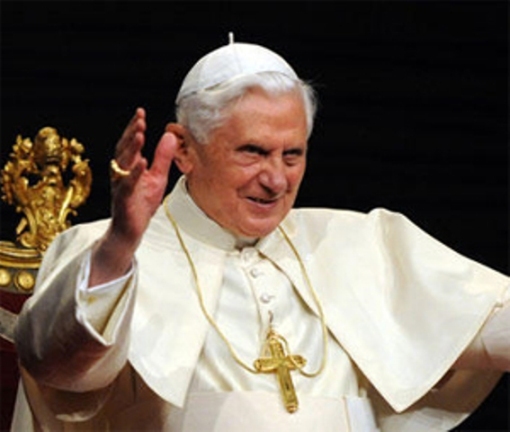
Vatican City, Oct 20, 2010  (CNA/EWTN News).- Pope Benedict XVI said that World Mission Sunday is an opportunity for Catholics to to reflect on the Church’s mission to bring Christ’s message and love to “every people, culture, race and nationality.”

Authentic Christian mission recognizes that God’s love cross all geographical borders and boundaries of culture, the Pope said in a message prepared for the annual day of prayer and promotion of the Church’s missionary activity, to be celebrated this year on Oct. 24.

“The Father calls us to be sons and daughters, loved in the beloved Son, and to recognize that we are all brothers and sisters in (Christ), who is the gift of salvation for humanity,” the Pope reflected.
The Pope said that while “discord and sin” divide humanity, members of the Church are called to bear witness by the example of their lives and to promote a “new humanism founded on the Gospel of Jesus.” The demonstration of authentic love, he said, gives credibility to the words of the Gospel, both in its historic centers and in remote lands.

This proclamation of God’s love in Christ, he emphasized, is “a duty of the whole Church” which is “by her very nature missionary.” While some individuals experience a particular call to proclaim this message as clergy, catechists, or lay missionaries, others participate in the universal mission to “offer signs of hope and to become universal brethren.” In all circumstances, he said, “the Gospel is a leaven of freedom and progress” and “a source of brotherhood.”

Pope Benedict stressed that the task of foreign missions “cannot be fulfilled without a … community and pastoral conversion” involving “all diocesan and parish communities.” The local church’s celebration of the Eucharist, he explained, both calls and enables its members “to promote the proclamation of the Gospel in the heart of … every people, culture, race and nationality in every place.”

Pope Benedict expressed special gratitude of “missionaries who bear witness to the coming of the Kingdom of God in the most remote and challenging places, often with their lives.” Describing them as the “vanguard of the Gospel’s proclamation,” he urged all members of the Church to support the work of the Pontifical Missionary Societies through prayer and the gift of their resources.

Pope names 24 new cardinals

Pope Benedict XVI

October 20, 2010 VATICAN CITY (KATAKAMI / MSNBC.COM / AP) — Pope Benedict XVI has named 24 new cardinals, including a large number of Italians, two Americans and prelates for key posts in Europe, Latin America, Asia and Africa.

The new cardinals include Archbishop Donald Wuerl of Washington, D.C., and Archbishop Raymond Burke, an American who leads a Vatican court and has been sharply critical of the Democratic Party in the United States for its support of abortion rights.

The pope made the announcement Wednesday, putting his mark on the body that will elect his successor.
Other key posts were Warsaw, Munich, Kinshasa, Quito, Lusaka, Zambia, and Sri Lanka.

Protests on SBY anniversary

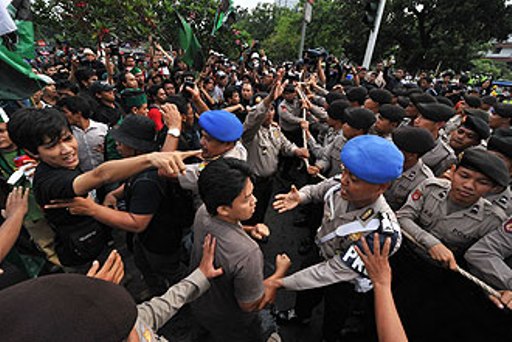
Police blocks anti-government demonstrators outside the presidential palace in Jakarta. -- PHOTO: AFP


October 20, 2010 JAKARTA (KATAKAMI / THE STRAITS TIMES / AFP) —   THOUSANDS of protesters took to the streets in Indonesia on Wednesday to mark the first anniversary of the swearing in of President Susilo Bambang Yudhoyono.

Anti-government rallies were staged in Jakarta, Bandung, Surabaya, Palu and Bogor, where students reportedly clashed with police. Almost 20,000 police were on standby in the capital to deal with unrest, the Antara state news agency reported, but there were no reports of violence in the city.

About 300 protesters gathered in front of the presidential palace in Jakarta, shouting ‘SBY has failed, SBY has failed’. ‘He has failed to eradicate corruption,’ said Rudi Daman of a group called the People’s Defender Front.


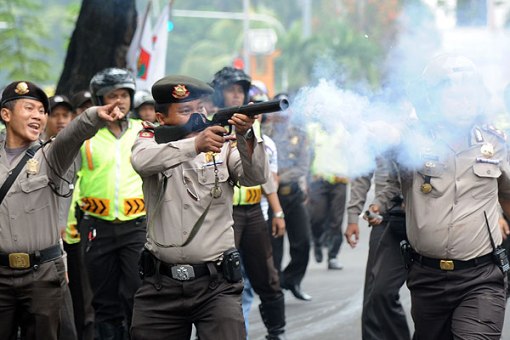
A policeman fires tear gas over anti-government protestors during clashes near the presidential palace. -- PHOTO: AFP


Another protester, Yati Andriyani of the Commission for Missing Persons and Victims of Violence, said Dr Yudhoyono had not honoured promises to protect human rights in the mainly Muslim country of 240 million people. ‘They were only empty promises,’ she said.

Demonstrators threw Molotov cocktails at police who responded with tear gas in Makassar, South Sulawesi province, on Tuesday as Dr Yudhoyono visited the town.

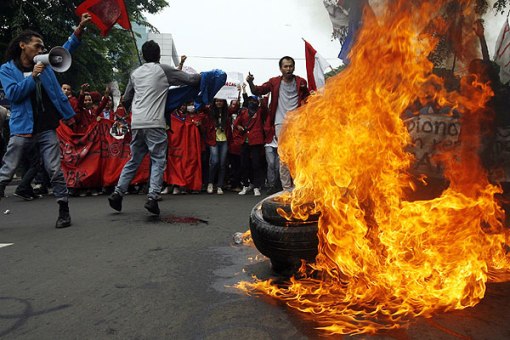
A group of protesters burns tyres and block a road during a rally in Jakarta. -- PHOTO: REUTERS


The president, a centrist ex-general, warned protesters to express dissent within the limits of the law and not to try to overthrow the government, a loose coalition of nationalist secular and Islamic parties.

‘The democracy we all want is not one leading to a sea of slander and anarchy, which can damage the things that we have built,’ Dr Yudhoyono told Elshinta radio. ‘As a country, the world will see whether a nation’s democracy is ethical and civilised or not.’ –

AFP
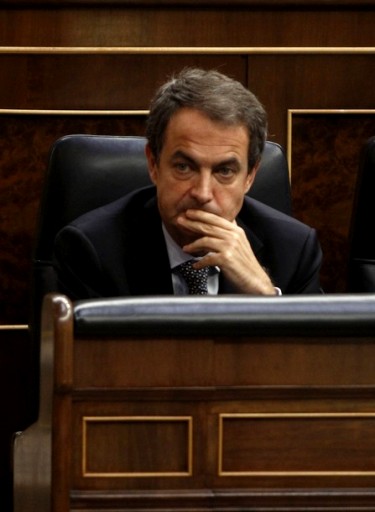
Spain's Prime Minister Jose Luis Rodriguez Zapatero gestures at the Spanish parliament before a debate on the 2011 budget in Madrid October 19, 2010. (Getty Images / REUTERS/Andrea Comas )

October 20, 2010 (KATAKAMI / FRANCE 24 / AFP) – Spanish Prime Minister Jose Luis Rodriguez Zapatero will announce a “broad reshuffle” of his cabinet, the government said on Wednesday.
The Spanish leader is shaking up his team after securing enough support to narrowly pass a cost-slashing budget through parliament. A budget defeat would have forced him into early general elections.

Zapatero will drop Foreign Minister Miguel Angel Moratinos, replacing him with Health Minister Trinidad Jimenez, and name his Interior Minister Alfredo Perez Rubalcaba as deputy prime minister, El Pais said in its online edition.

“There will be a broad reshuffle of the government,” said a spokesman for the prime minister’s office. He declined however to give any details.

Zapatero will meet in the morning with King Juan Carlos I to inform him of the ministerial changes and then announce the new government to the press, he said.

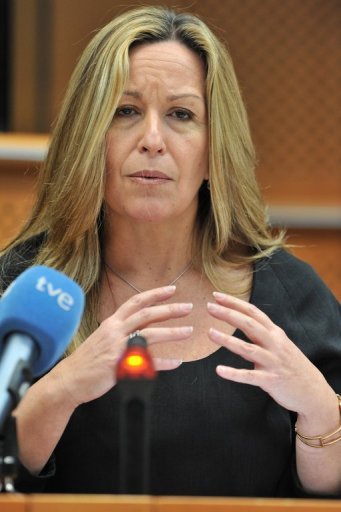
Spanish Health Minister Trinidad Jimenez, seen here in January 2010, is set to replace Miguel Angel Moratinos as Foreign Minister, according to the online edition of El Pais. Spanish Prime Minister Jose Luis Rodriguez Zapatero will announce a "broad reshuffle" of his cabinet, the government has said.

Zapatero has slumped in the opinion polls as he pushed through painful austerity measures and labour market reforms, and advocated deep budget cuts to avoid a Greek-style debt crisis.

The major challenge for him now is passing a budget that pledges to cut spending next year by 7.9 percent to 122 billion euros (170 billion dollars).

There had been some doubt as to whether the government could pass the budget as the economic measures cost the Socialists the support of smaller parties further to the left.

General elections are not scheduled until 2012 but failure to pass the budget, scheduled for a first reading as early as Wednesday, would almost certainly have forced an early election.

Zapatero apparently secured the budget’s passage on Monday by winning the support of a tiny regional party, the Canary Islands Coalition with two seats in the 350-seat parliament.

The government sealed a similar deal on Friday with the centre-right Basque Nationalist Party, which has six seats in the assembly.

With 169 seats in Spain’s 350-member assembly, Zapatero’s Socialists are seven seats short of a majority and have to pass legislation on a vote-by-vote basis.

Obama backs Venezuela’s right to nuclear energy

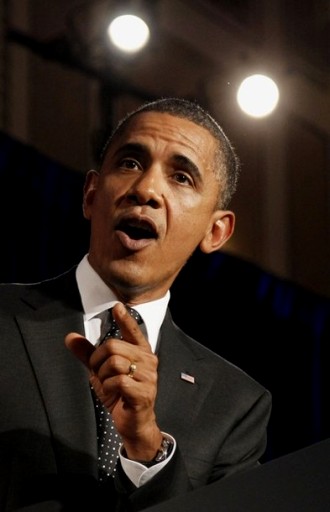
U.S. President Barack Obama (Getty Images)

October 20, 2010. WASHINGTON, USA (KATAKAMI / ASIAONE) – US President Barack Obama said Tuesday he had no objection to Venezuela developing nuclear power for civilian energy purposes, days after Caracas and Moscow signed a landmark deal.

“We have no incentive nor interest in increasing friction between Venezuela and the US, but we do think Venezuela needs to act responsibly,” Obama told Spanish media at the White House.

“Our attitude is that Venezuela has rights to peacefully develop nuclear power,” he said, adding that as a signatory of the nuclear non-proliferation treaty it must also meet its obligations not to weaponize those systems.

Venezuelan President Hugo Chavez clinched a deal in Moscow on Friday that will see Russia build and operate the first nuclear power plant in his country.

Closer ties between Moscow and Caracas – Chavez has bought more than US$4 billion (S$5.26 billion) of weapons from Russia and promised to give it greater access to Venezuelan oil fields – are being closely watched in Washington.

In an apparent reference to the United States, Russian President Dmitry Medvedev acknowledged that the move to build the nuclear research facility could concern some countries.

“I do not know if anyone is going to shudder at this. The president (Chavez) said there are going to be states that have different emotions about this. But I wanted to say our intentions are clean and honest.”
The agreement was signed by the head of Russia’s atomic energy agency Sergei Kiriyenko and built on a plan agreed by Prime Minister Vladimir Putin with Chavez during a visit to Caracas in April.

Further details were not given about the timing or cost of the construction of the station, but Medvedev said diversifying energy sources was a priority even for a energy-rich country like Venezuela.

Obama said Tuesday that the United States would continue to push for human rights and political and media freedoms in Venezuela as he urged the Venezuelan people not to believe their leader’s anti-American propaganda.

“The antagonism between our two countries is not inevitable,” he said.

“We want the people of Venezuela to be thriving economically, we also want the people of Venezuela to have a voice in their own government, that’s something we cannot impose externally.”

In his latest sparring with Washington, Chavez officially informed the United States last month that he would not accept Obama’s designated ambassador to Caracas.

The Venezuelan leader has strenuously objected to the appointment of veteran diplomat Larry Palmer after he sharply criticized the Chavez government in his Senate confirmation hearings.

US, Pakistan Convene Strategic Dialogue


U.S. Secretary of State Hillary Clinton


October 20, 2010 (KATAKAMI / VOA / REUTERS) — U.S. and Pakistani officials are meeting in Washington Wednesday to begin a third round of a strategic dialogue started earlier this year.

Secretary of State Hillary Clinton and her Pakistani counterpart, Shah Mehmood Qureshi, will lead the three days of talks.

The U.S. is expected to offer Pakistan as much as $2 billion over five years to help fight insurgents along its border with Afghanistan.

The offer is seen as part of an effort to ease tension stemming from recent NATO and U.S. military strikes on the Pakistan side of the border. U.S. impatience with Pakistan’s hesitance to fight insurgents has also stirred tensions.

White House spokesman Robert Gibbs said Tuesday that Pakistan is beginning to cooperate more and that this week’s meetings will be an opportunity for U.S. officials to outline to the Pakistanis what else must be done.

U.S. President Barack Obama is also holding talks on Pakistan and Afghanistan Wednesday with his security advisers at the White House.

President Obama’s closed-door discussions are likely to cover Washington’s support for the Afghan government’s recent efforts to reach a peace deal with the Taliban, as well as U.S.-Pakistan relations.

The three-day U.S.-Pakistan meetings will include talk of refocusing U.S. civilian aid to help Pakistan rebuild after its devastating floods. The defense and military chiefs of the two countries will also take part in the strategic dialogue.

Tensions erupted last month after a NATO helicopter mistakenly killed two Pakistani soldiers along the Afghan-Pakistani border.

Pakistan responded by closing a key crossing point for NATO supply convoys into Afghanistan, an action that exposed the trucks to attacks by Pakistani militants.

The United States apologized for the deaths, and Pakistani authorities reopened the crossing after ten days.

The U.S.-Pakistan strategic dialogue began in Washington in March and continued during Secretary Clinton’s visit to Pakistan in July.


Some information in this story was provided by Reuters.

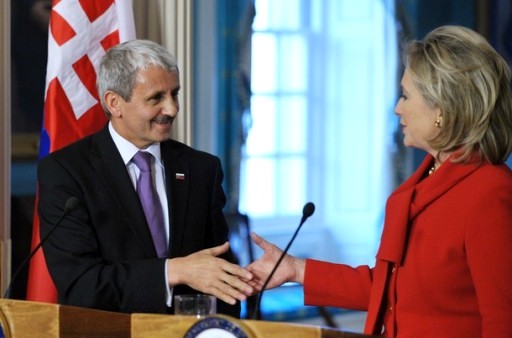
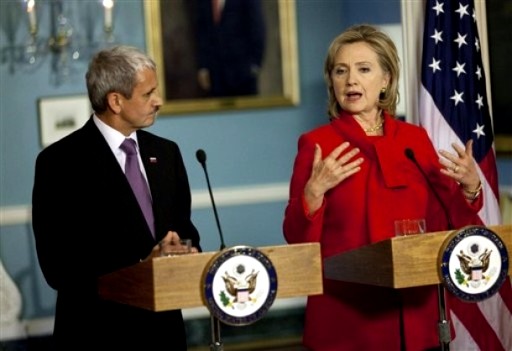
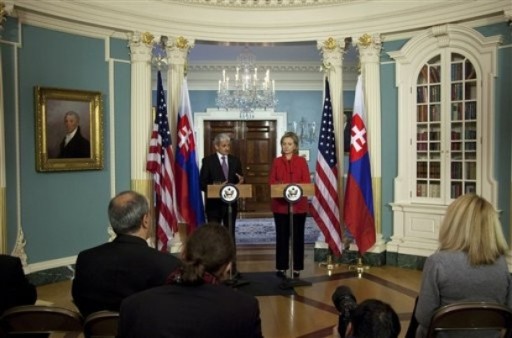
Photostream : US Secretary of State Hillary Clinton meets Slovakian Foreign Minister Mikulas Dzurinda

US Secretary of State Hillary Clinton and Slovak Foreign Minister Mikulas Dzurinda shake hands at a joint press conference following a bilateral meeting October 19, 2010 at the State Department in Washington. (Photo : MANDEL NGAN/AFP/Getty Images)
Secretary of State Hillary Rodham Clinton, right, speaks at a news conference with Slovakian Foreign Minister Mikulas Dzurinda at the State Department on Tuesday, Oct. 19, 2010 in Washington. (Getty Images / AP Photo/Evan Vucci)
Secretary of State Hillary Rodham Clinton, right, holds a news conference with Slovakian Foreign Minister Mikulas Dzurinda at the State Department on Tuesday, Oct. 19, 2010 in Washington. (Getty Images/AP Photo/Evan Vucci)
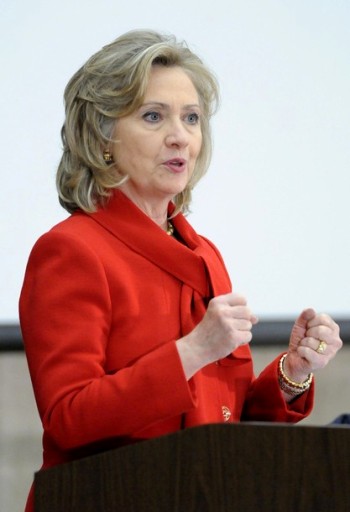
U.S. Secretary of State Hillary Clinton (Getty Images)

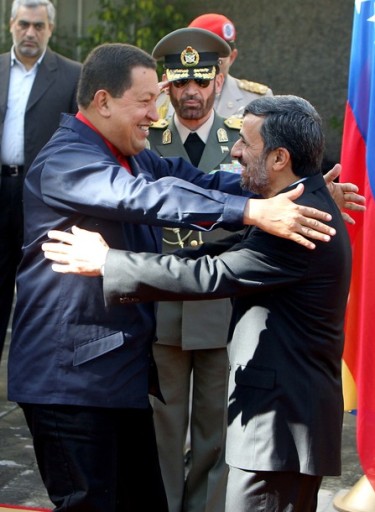
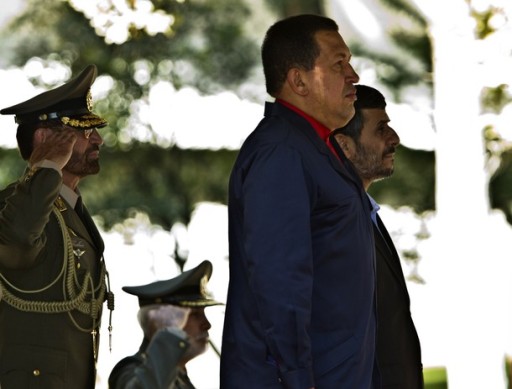
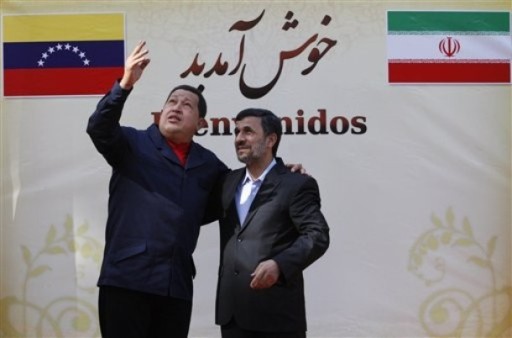
Photostream : Venezuelan President Hugo Chavez meets Iranian President Mahmoud Ahmadinejad

Iranian President Mahmoud Ahmadinejad (R) greets his Venezuelan counterpart Hugo Chavez during a welcoming ceremony in Tehran on October 19, 2010. (Photo : ATTA KENARE/AFP/Getty Images)
Iran's President Mahmoud Ahmadinejad (R) and Venezuela's President Hugo Chavez stand at attention during the playing of the national anthems during an official welcoming ceremony in Tehran October 19, 2010. (Getty Images / REUTERS/Raheb Homavandi )
Venezuelan President Hugo Chavez, left, gestures, as he is welcomed by his Iranian counterpart Mahmoud Ahmadinejad, during an official welcoming ceremony, in Tehran, Iran, Tuesday, Oct. 19, 2010. Venezuelan President Hugo Chavez is holding talks with Iranian leaders expected to focus on boosting cooperation between the countries' oil, gas and petrochemical industries. Writing on banner at background in Farsi and Spanish reads "Welcome". (Getty Images / AP Photo/Vahid Salemi)

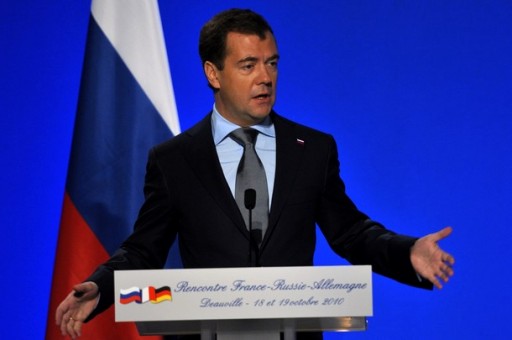
Russia’s Medvedev to attend NATO summit next month


Russia's President Dmitry Medvedev speaks at a news conference also attended by France's President Nicolas Sarkozy and and German Chancellor Angela Merkel in Deauville October 19, 2010. Medvedev said after talks with Sarkozy and Merkel that he would attend a NATO summit next month in Lisbon but wanted more details on an offer to cooperate with the alliance on a missile shield. (Getty Images / REUTERS/Philippe Wojazer )

October 19, 2010 (KATAKAMI / FRANCE 24 / AP)  - Russian President Dmitry Medvedev has accepted an invitation to a summit of NATO leaders in Portugal next month.

Medvedev said at a summit with the leaders of France and Germany on Tuesday that he will go to the NATO summit in Lisbon.

German Chancellor Angela Merkel says ``I'm very happy that the Russian president will take part in the NATO summit. I'm pleased there is a basicwilingness to participate.''

Leaders of NATO countries, including President Barack Obama, are expected to attend the summit.

NATO had invited Russia to join but as of last Friday NATO's chief Anders Fogh Rasmussen said he had not had a response from the Kremlin.

Russia-NATO summit to contribute to European security – Rogozin

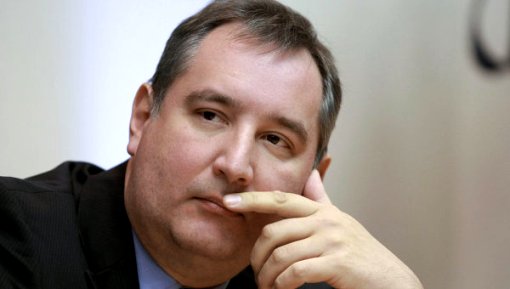
Dmitry Rogozin, Russia's envoy to the military alliance

October 19, 2010 (KATAKAMI / RIA NOVOSTI) — A forthcoming Russia-NATO summit in Lisbon will help Russia find common ground with its European neighbors on the issue of European security, a Russian envoy to NATO said on Tuesday.

Russian President Dmitry Medvedev said earlier on Tuesday that he would attend the Russia-NATO summit on November 20, part of NATO Lisbon summit on November 19-20.

“Emphasis will be placed on the Russian ideas, on Russia’s proposals and on our vision of the future of Europe,” Dmitry Rogozin said in an interview with Rossiya 24 television news channel.

President Medvedev proposed drawing up a new European security pact in June 2008, and Russia published a draft of the treaty in December 2009, sending copies to heads of state and international organizations, including NATO. However, the proposal has been met coolly by Western powers.

“This is a chance for us and a chance for the West to try to find common interests at a political level and try not just to hold talks, but also to do something together to deter threats,” Rogozin said.

Rogozin earlier said he hoped the Russian-NATO Council summit in Lisbon would help clarify preparations for the European missile defense plan.

NATO Secretary General Anders Fogh Rasmussen has repeatedly said that NATO wants Russia to be part of a missile defense plan for Europe, but Russia says a serious assessment of missile risks should be carried out before starting on the project.

MOSCOW, October 19 (RIA Novosti)